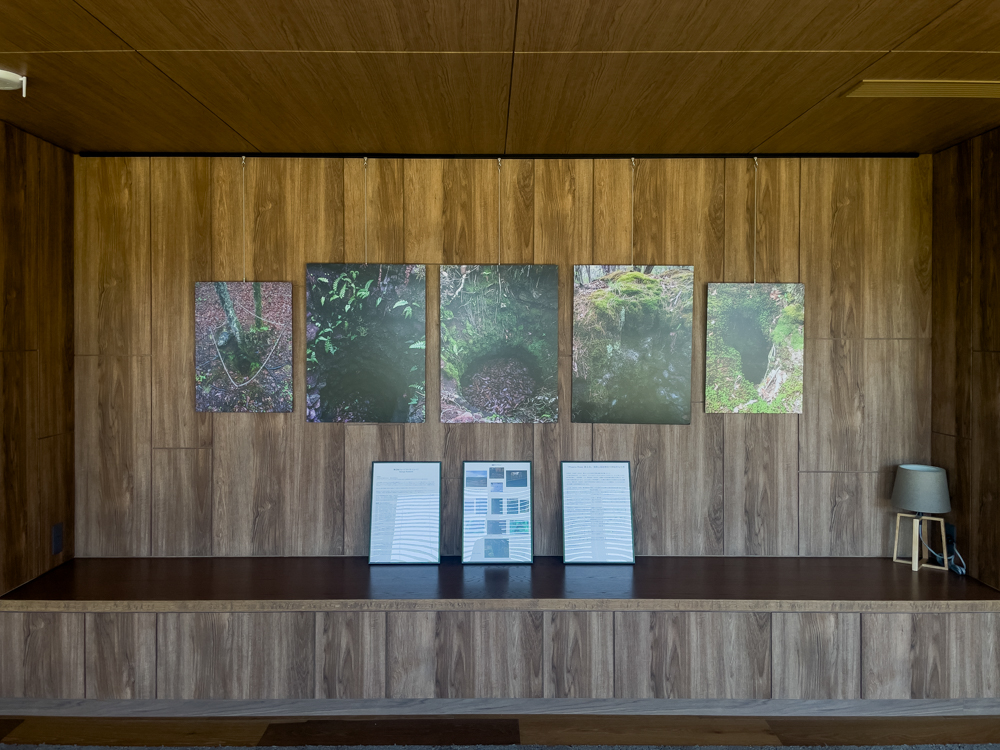
Phoenix Rises (The Mysterious World of the Mount Asama Pyroclastic “Tree Moulds”) 2021-2023
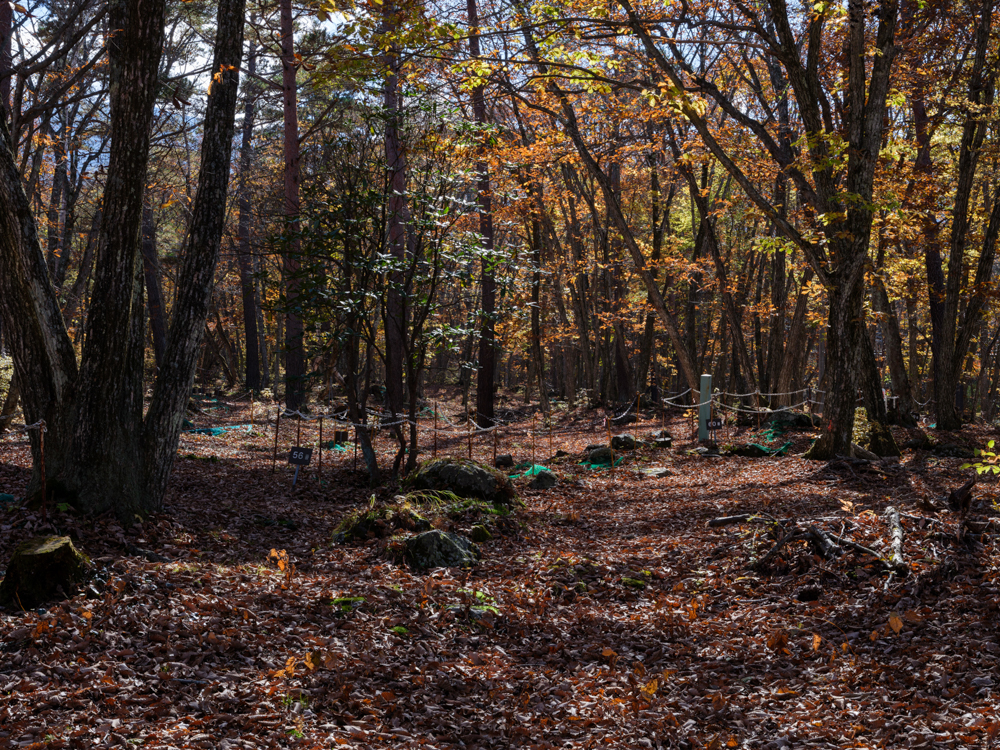
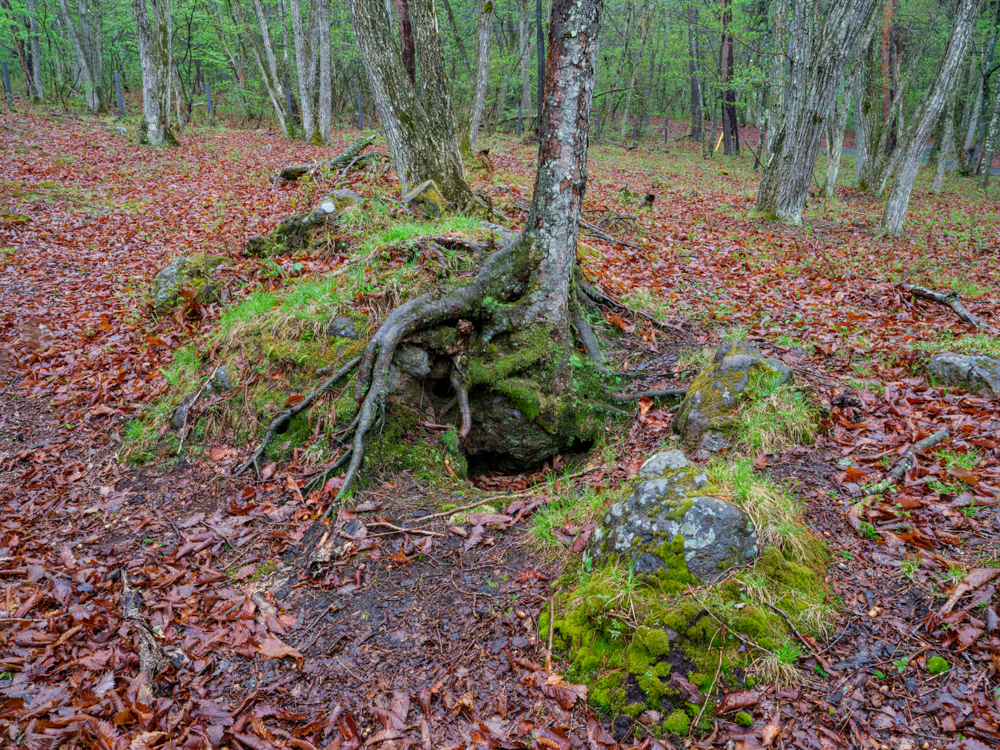
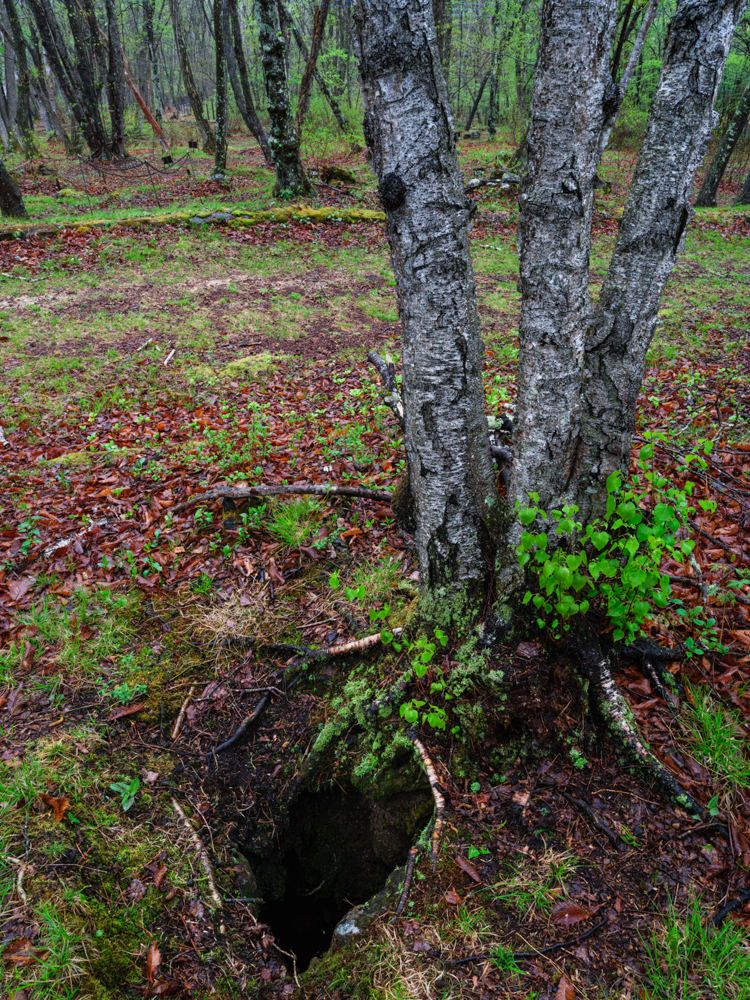
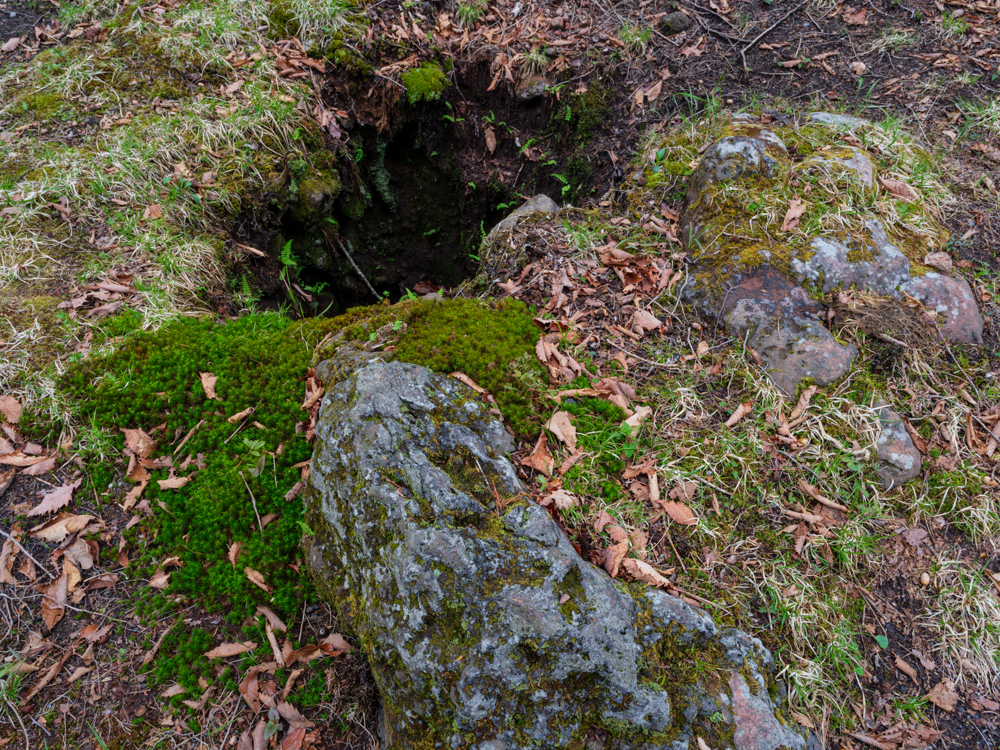
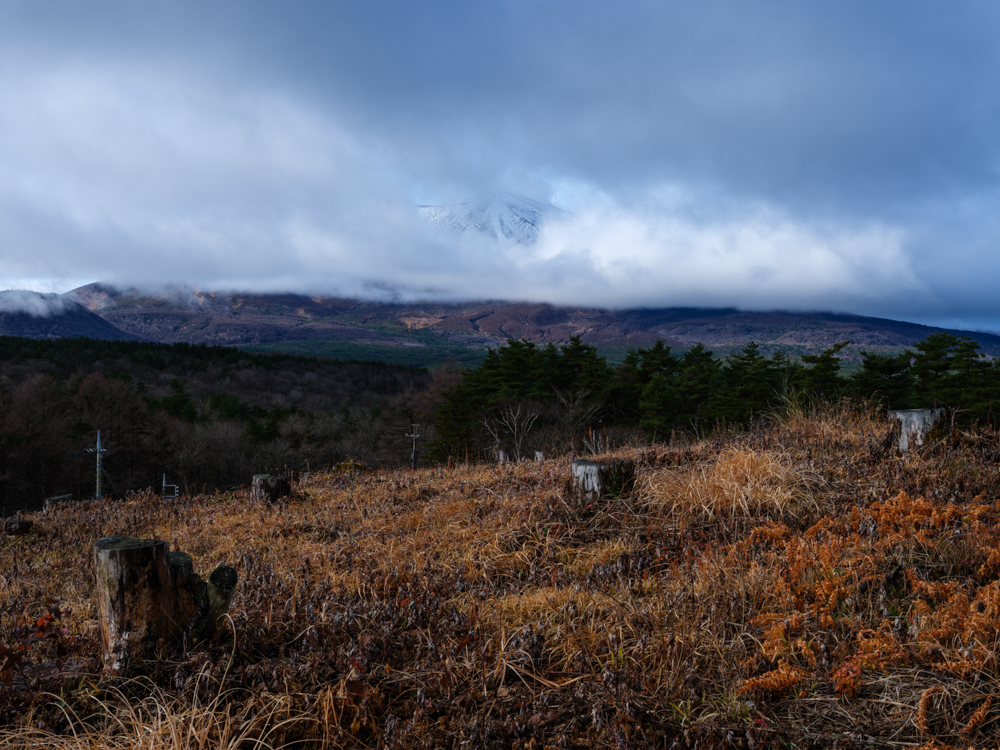
On August 4, 1783, a pyroclastic flow from a major eruption hit the forest at the foot of Mt. Asama, a complex volcano on the Nagano-Gunma border in Japan. The flow cooled and hardened, and the trees that had grown there decayed. What remained were hollows caused by the trunks and roots, or "lava tree moulds." In a survey conducted in 1975, about 500 tree moulds were measured, some as deep as seven meters. These are rare geological phenomena and are considered important for studying volcanic eruption patterns, and were designated a national natural monument in 1940. These moulds are located in Tsumagoi Village, Gunma Prefecture, about 45 minutes north of my hometown of Karuizawa.
In July 2021, after moving to Karuizawa that spring, I was driving along a forest road passing through a villa area on my way back from a road trip. I passed a small sign that read "Mt. Asama Eruption Aftermath." I was tired from my trip and I thought I would just go home, but something called to me and I made a U-turn and went to investigate. Since I started photography, I have begun to listen more to my instincts.
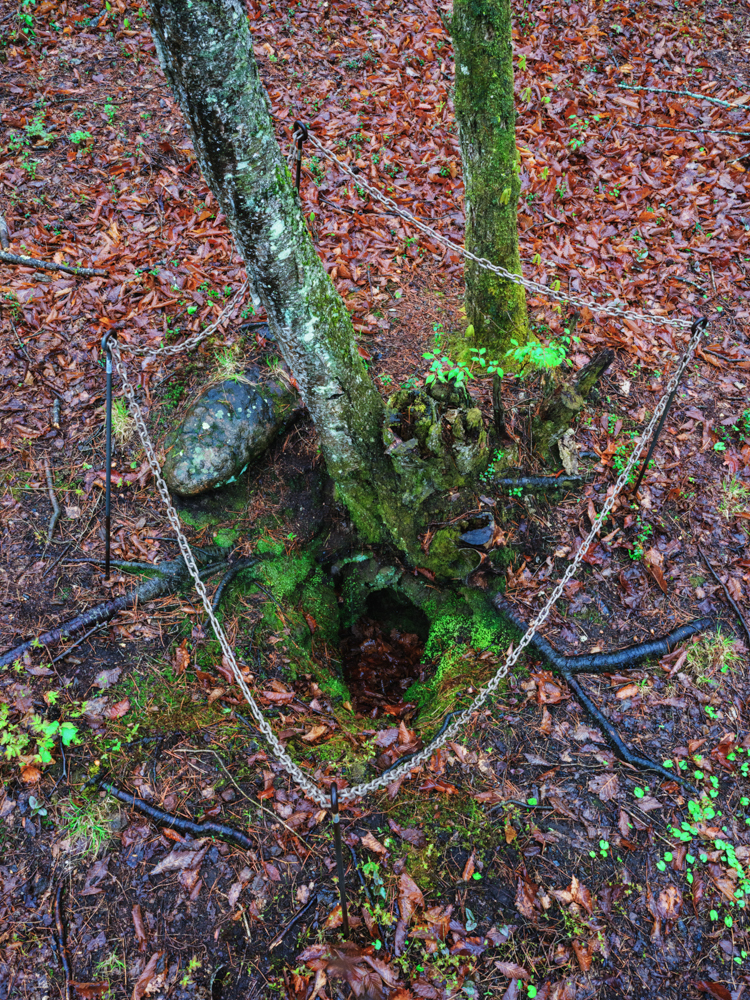
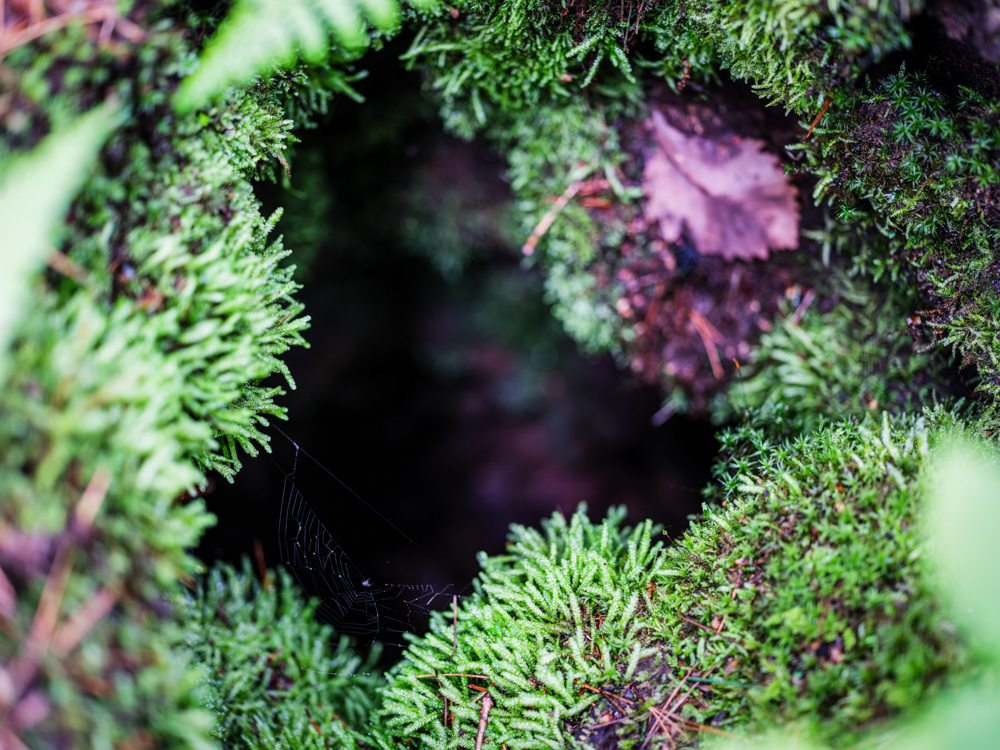
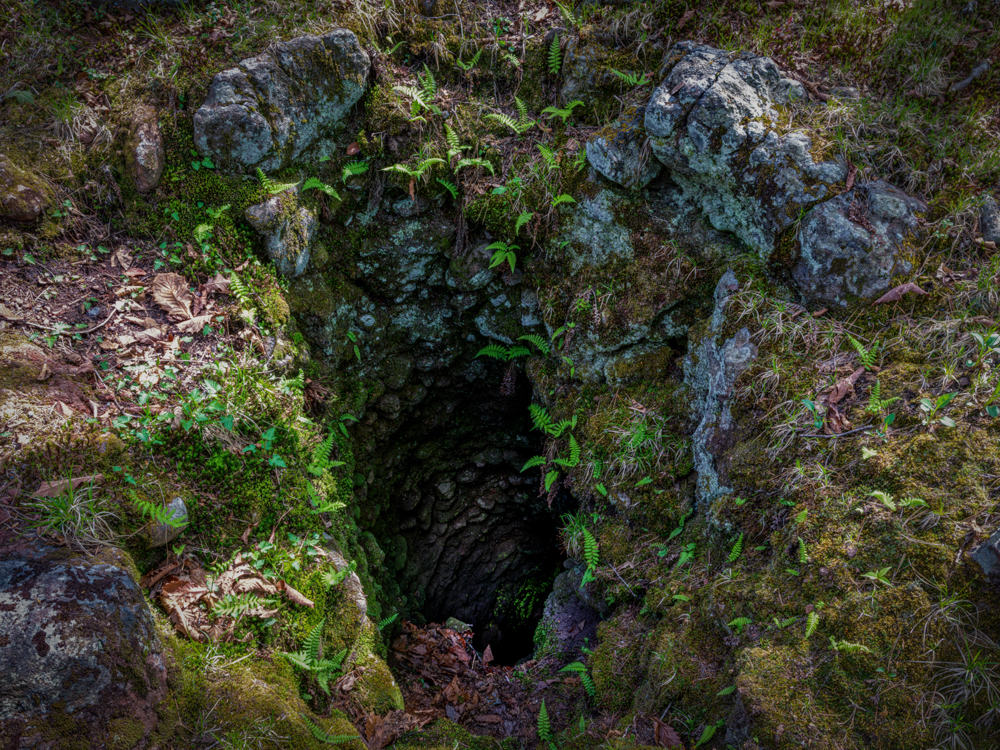
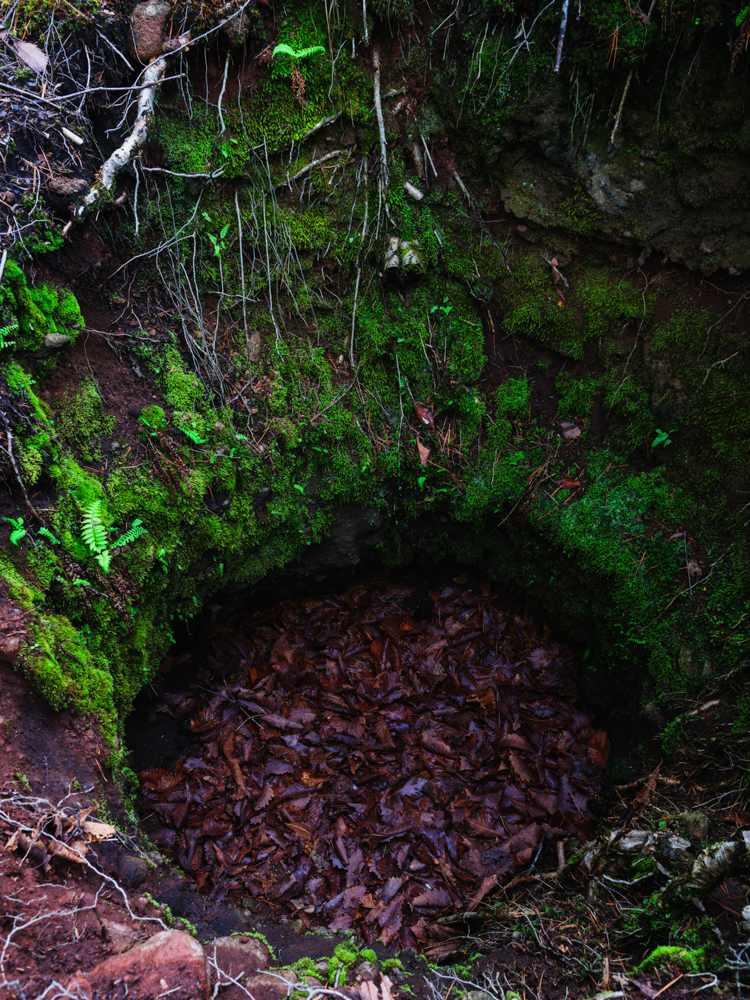
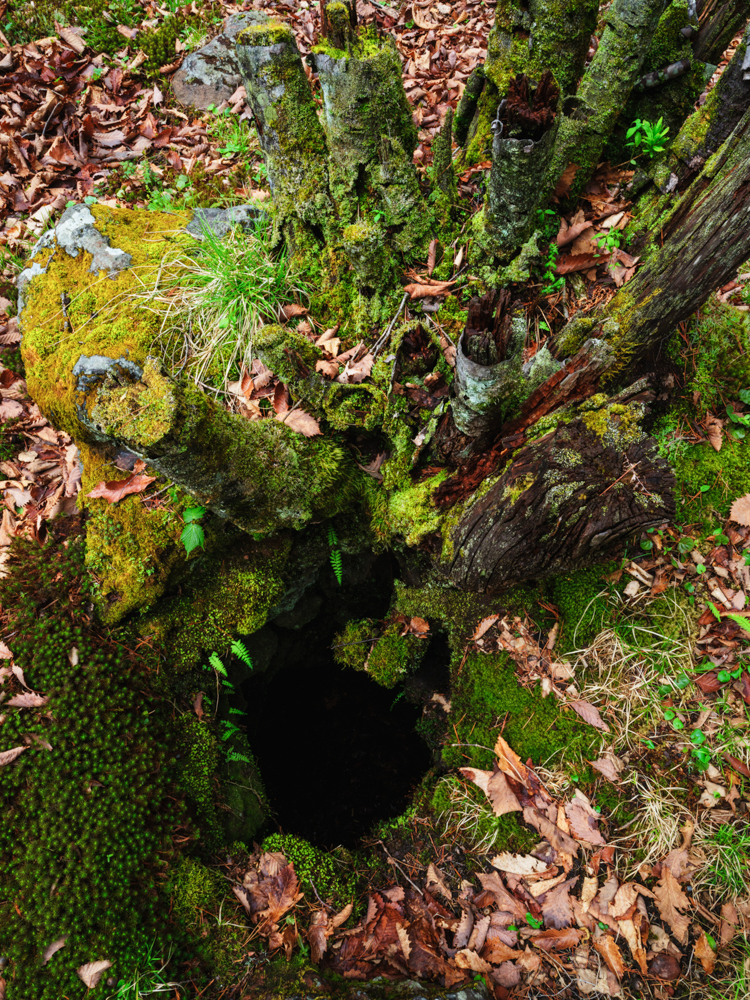
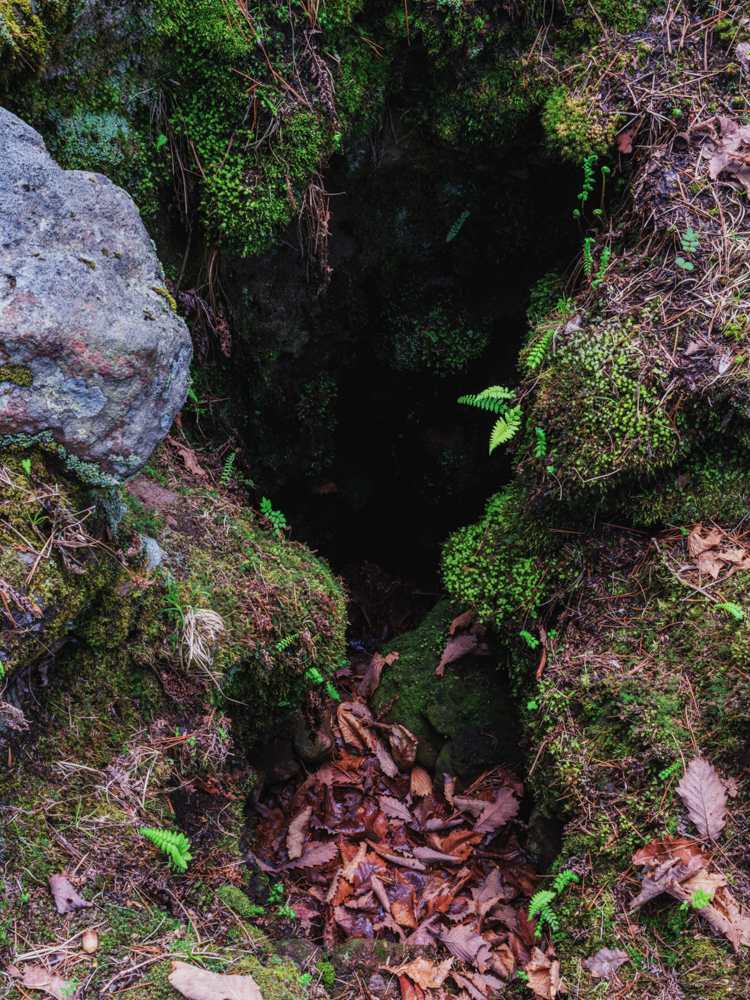
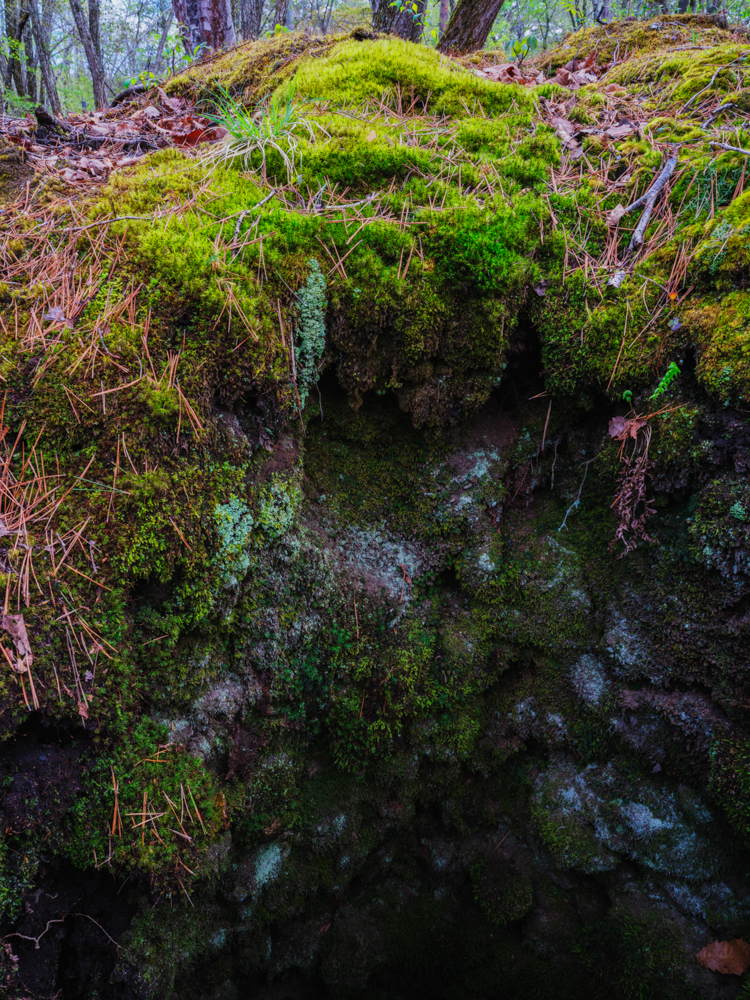
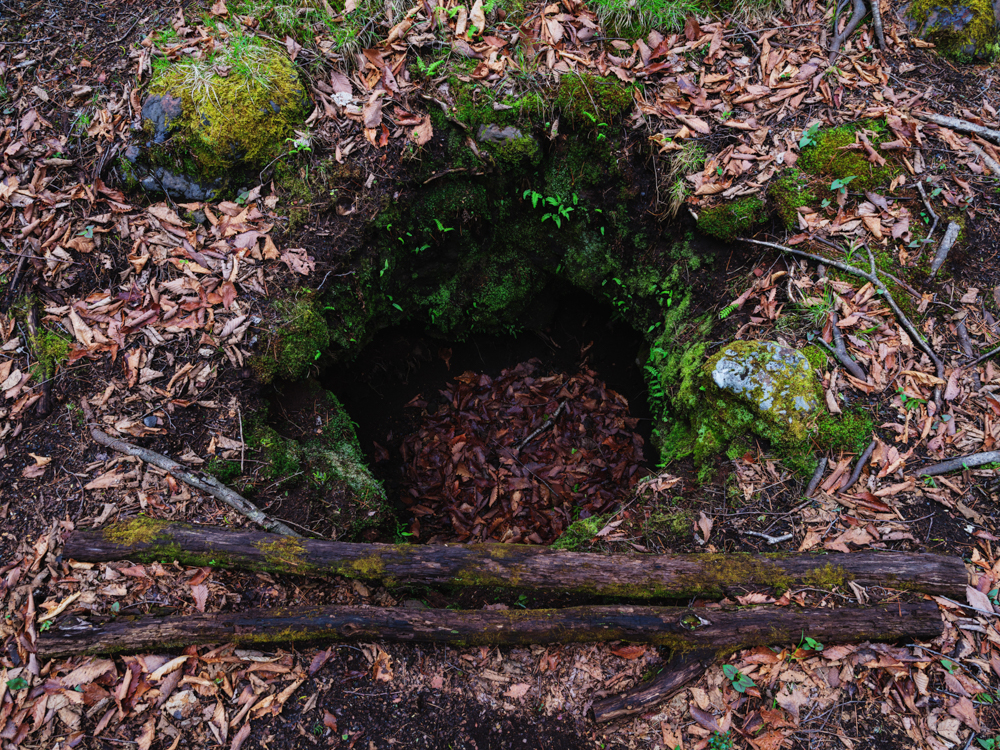
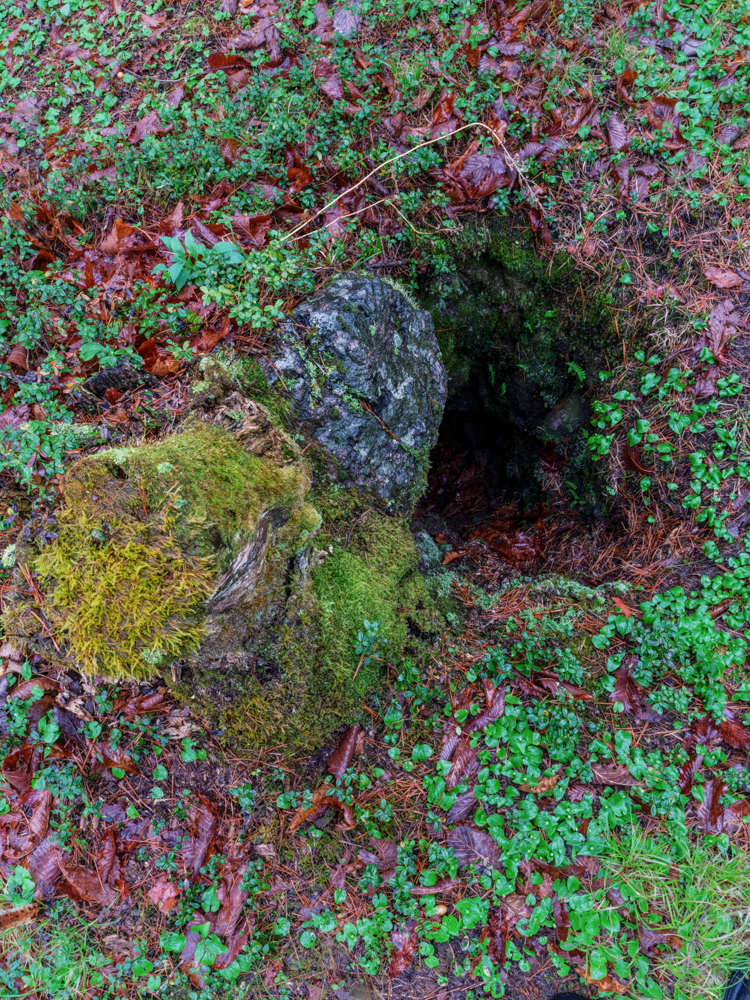
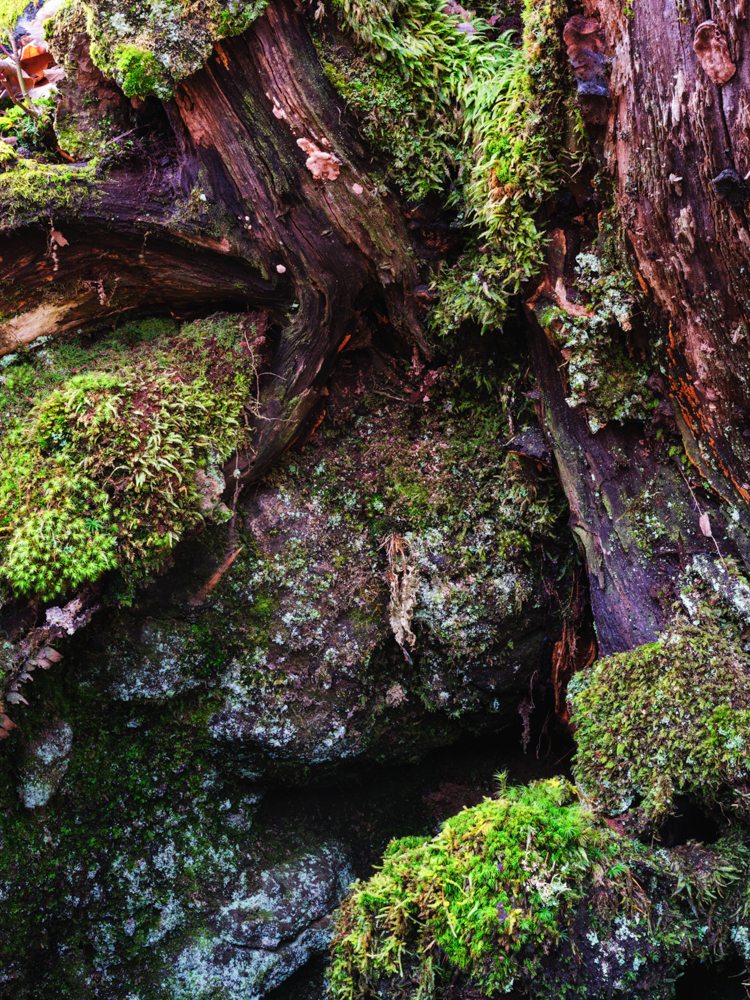
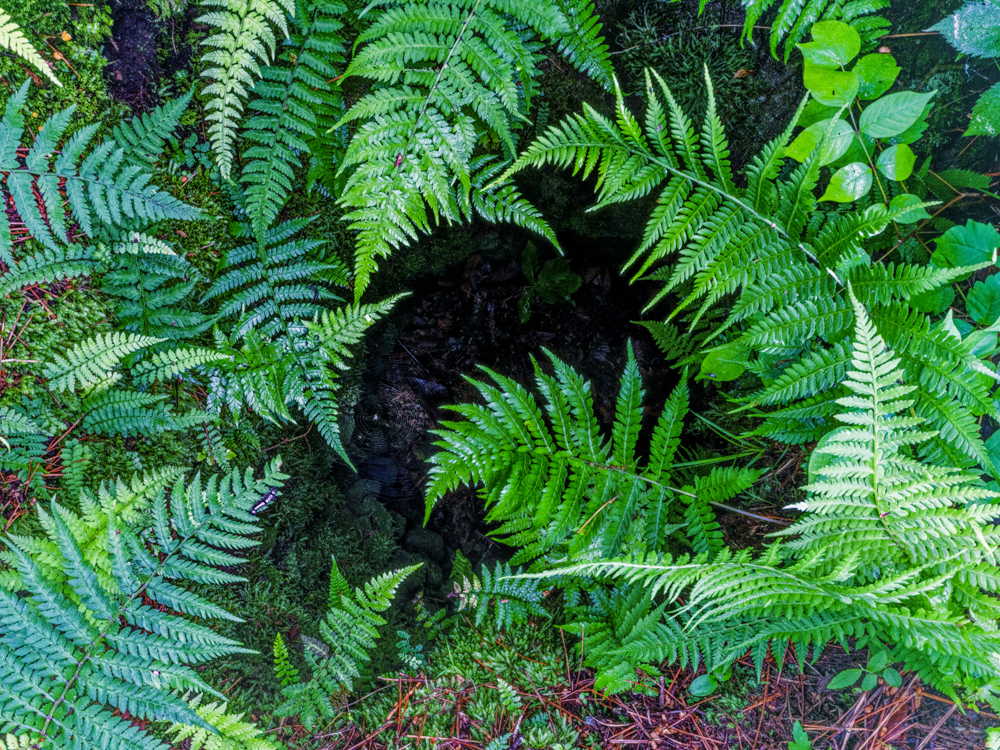
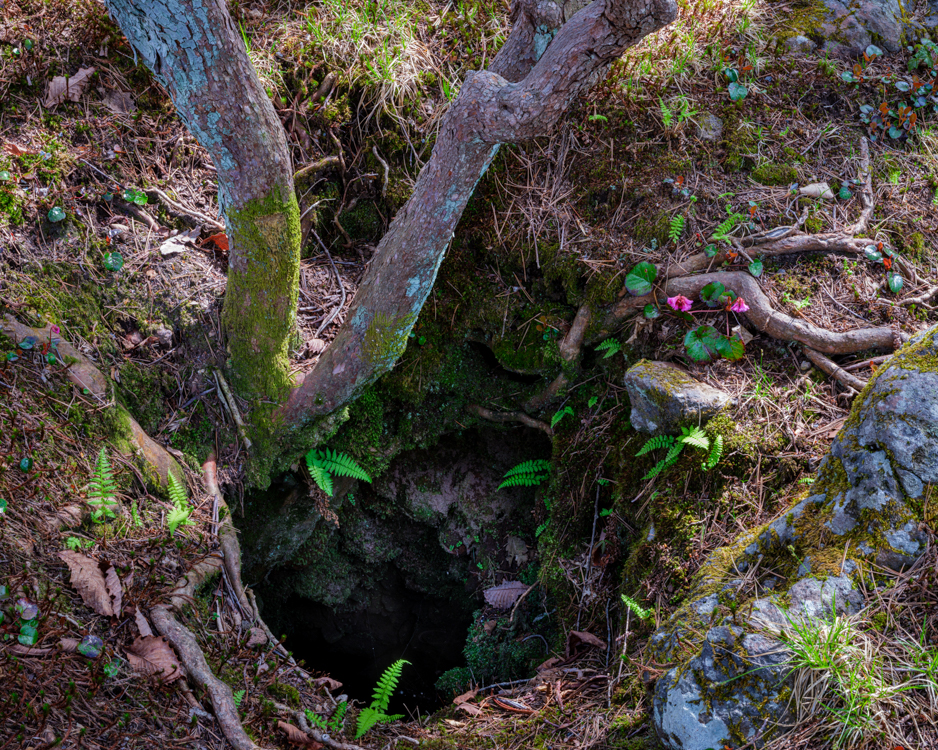
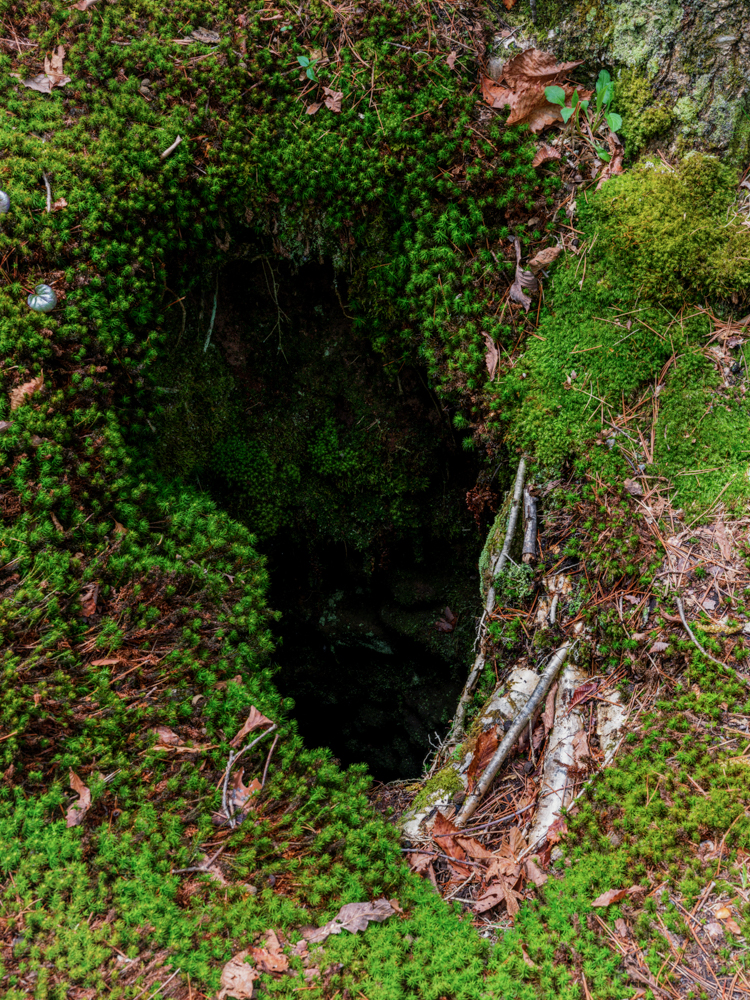
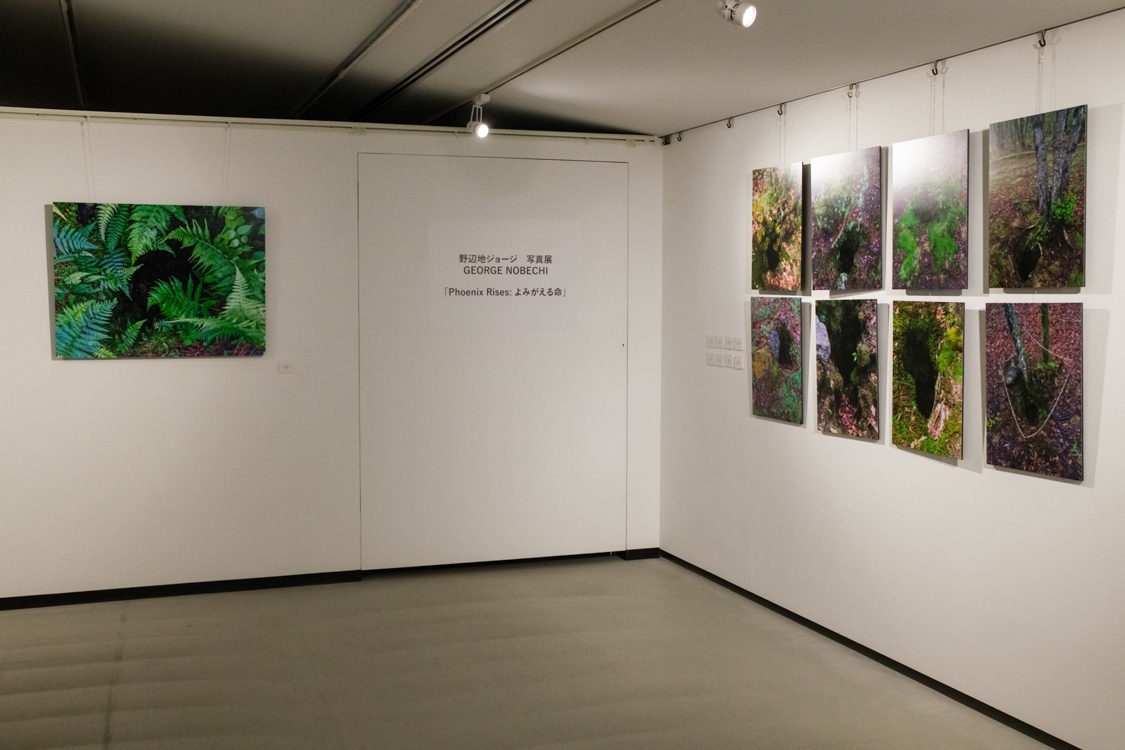
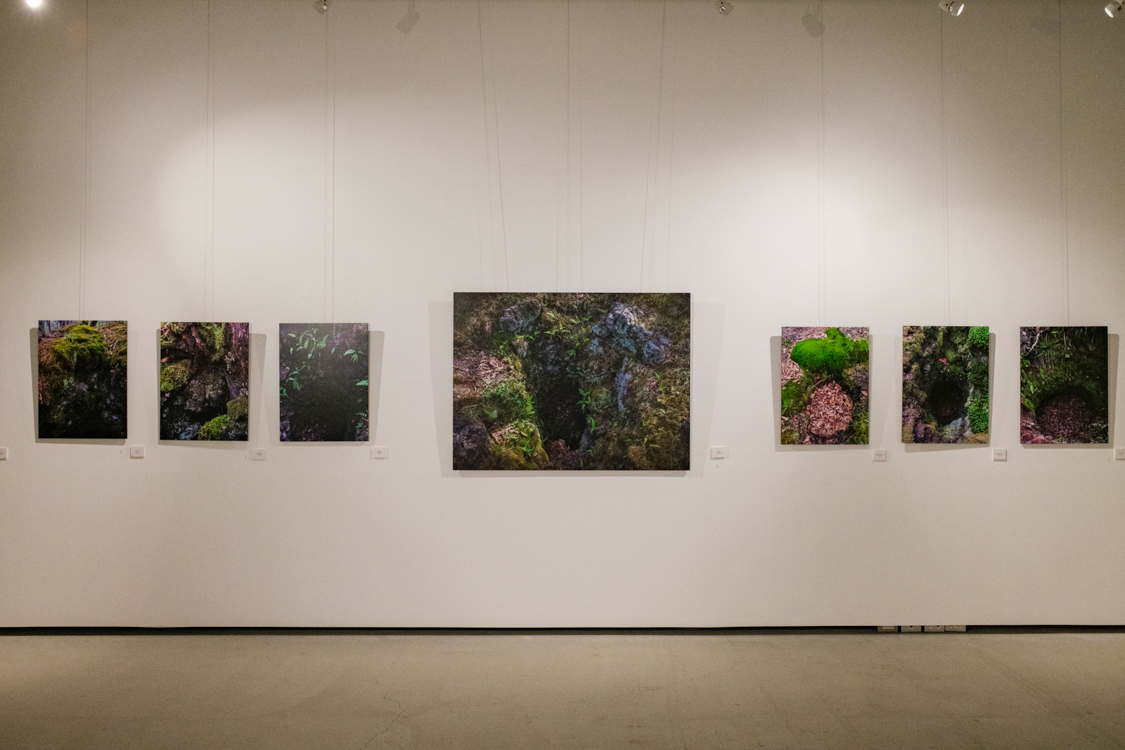
The lava formations I found there looked like natural wells, and when I leaned in closer and looked inside them, it was as though a small world existed inside. Moss and ferns grew, and insects came and went. Each world had formed in a vessel of a different shape and depth. Life that had been buried and vanished by pyroclastic flows approximately 240 years ago was reviving from the space that remained behind.
Our way of life and bonds that had been destroyed by the new coronavirus that spread around the world have left scars, too. There are many challenges for our future, including global warming and environmental pollution. I believe that the world hidden within these tree moulds may represent a possible better future.
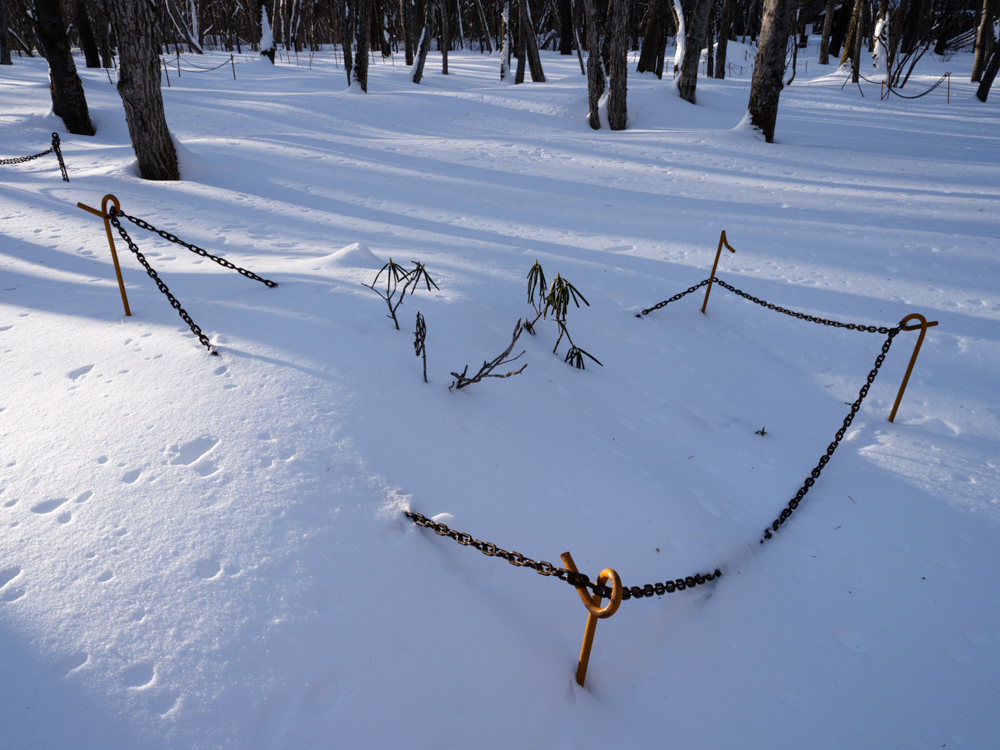
In order to tell this story, I made photographs over a period of about a year and a half, incorporating seasonal changes. In order to simultaneously photograph the mosses and ferns growing around the moulds as well as to show the micro worlds inside the holes, I needed a high resolution camera and plenty of depth-of-field. With the cooperation of Fujifilm, I used their GFX100S, a 102-megapixel camera. I also photographed with a special arm attached to a tripod with a remote release to avoid damaging the moss and other vegetation.
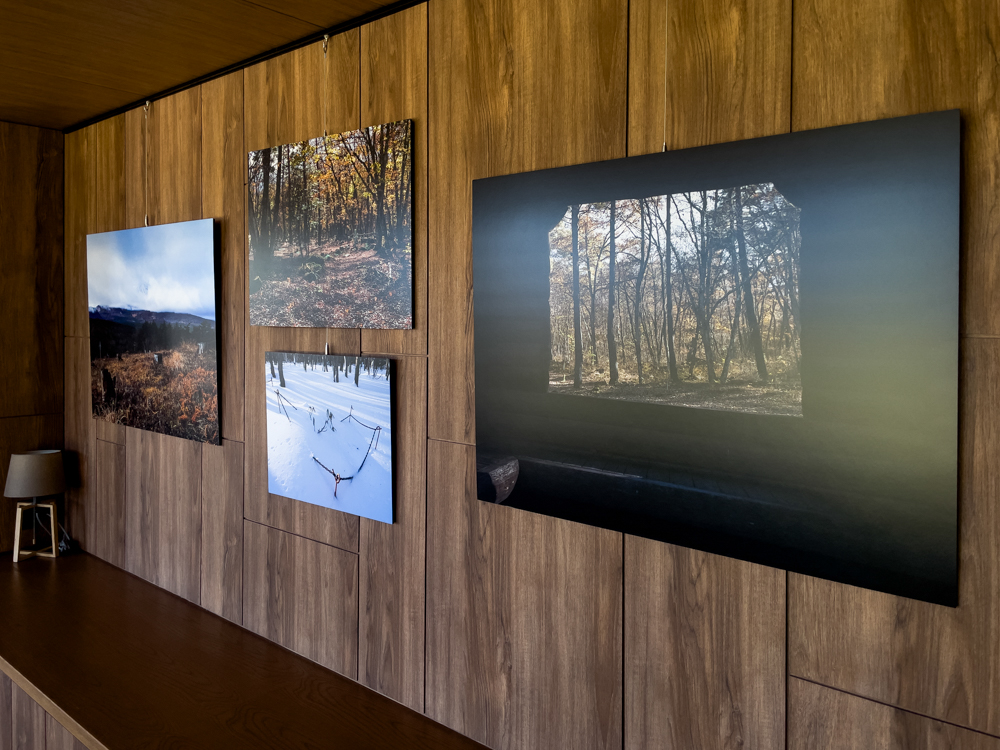
For my 2023 exhibition at the Hiroshi Senju Museum Gallery in Karuizawa, I paid special attention to the prints so that even the smallest of details could be clearly seen, and I opted to create C-prints (chromogenic cibachrome prints).
I hope that viewers will feel as if they have entered the forest at the foot of Mt. Asama, and that doing so will also spur them to give a little thought to our collective future.
A note on the captions: The photo captions consist of the lava mould number assigned by the Tsumagoi Village Board of Education, and the date when the photograph was made. In cases where there is no number assigned, they have been designated “Number Unknown.”
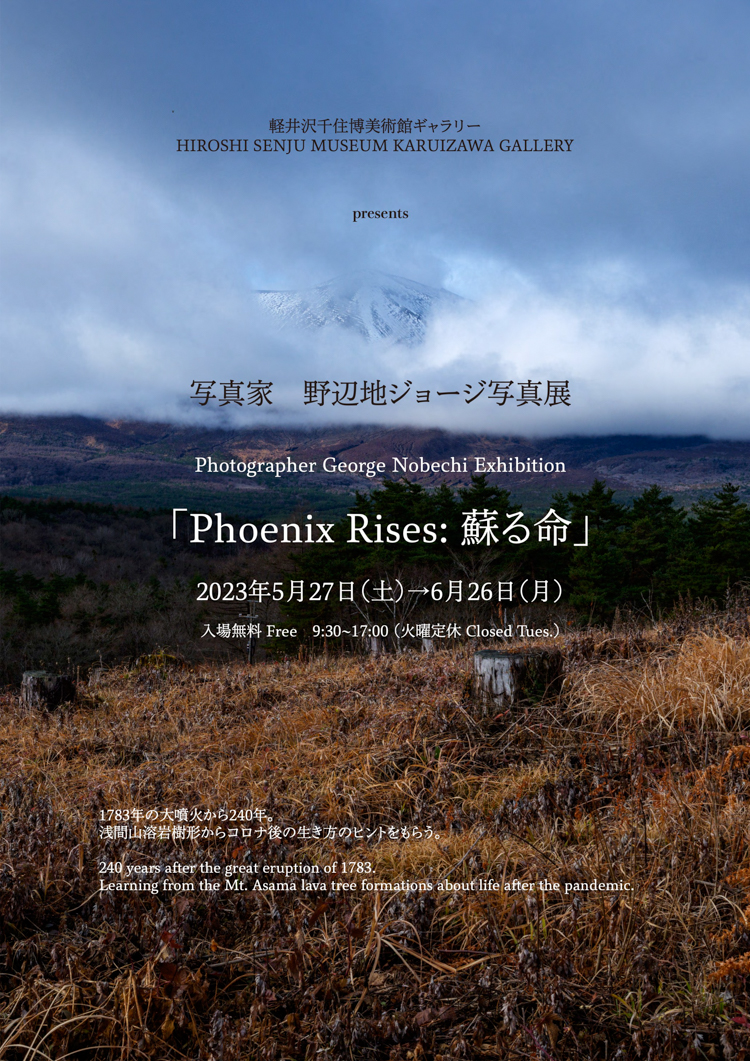
Phoenix Rises: 蘇る命 (浅間山溶岩樹型の神秘的な世界)2021-2023
天明3年(1783年)8月4日、噴火による火砕流が浅間山麓の森を襲った。その後、火砕流は冷え、そして固まり、そこに生えていた木々は朽ちていった。そこに残ったのは幹や根のみ、「溶岩樹型」である。昭和50年(1975年)の調査では約500個の樹型が計測され、中には深さ7m程のものもある。これらは珍しい地学現象で、火山噴火の様式などを研究するために重要とされ、昭和15年(1940年)に国の天然記念物にも指定された。この樹型は、軽井沢から45分ほど北に位置する群馬県嬬恋村にある。
令和3年(2021年)の7月、春に軽井沢へ移住した私は、遠方からの帰りに森の別荘地を通り抜ける林道をドライブしていた。すると、「浅間山溶岩樹型」という小さな看板を通り過ぎた。長旅の終わりでもあり、そのまま帰ろうと思ったが、何かに惹かれ、Uターンをしてその場所に戻った。写真を始めてからは、勘を信じて行動するようになる時が増えた。
そこにあった溶岩樹型は一見、自然の井戸にも見え、寄り添って覗き込むと、その中にはまるで小さな世界が存在していた。苔やシダも生え、昆虫が行き交う。そして、それぞれの世界には違う形や深さの器の中で生態が形成されていた。およそ240年前に火砕流によって埋もれていた生命が、後に残った空間から蘇っていた。
世界的に流行した新型コロナウイルスによって破壊された今までの生き方や絆は、まるで樹型のように傷跡が残る。地球温暖化や環境汚染を含め、我ら人類の未来の課題は少なくないのは事実であり、樹型の跡に生まれたのは大木が立つ元の森の環境ではなく、小さな世界である。この樹型の中に潜む世界が、我らの未来図を表しているのかもしれないと思う。
そのストーリーを語るため、季節の変化を取り入れながら、およそ一年半をかけて継続して撮影した。樹型の周辺にあるシダや草花と暗い穴の中の両方を一枚の写真に収めるために、深い被写界深度とスローシャッターを利用した。この手法には高画質のカメラが必要となった。富士フイルムの協力のもと、1億200万画素のカメラ、「GFX100S」を使用した。そして、樹型の苔やその他の植物を傷つけないために、三脚に特殊なアームを取り付け、リモートリリースで撮影することにした。
また、2023年の千住博美術館ギャラリー(軽井沢町)での個展の際には、細かい部分まではっきりと見えるよう、プリントにもこだわりを持ち、C-プリント(クロモジェニックプリント)で展示した。この作品を見る方々に、僅かながら浅間山の北麓の森へと入り込んだ気持ちになっていただき、我ら人類のコロナ禍後の生き方について少しばかり考えていただけることを望む。
キャプション情報:写真のキャプションは嬬恋村教育委員会が記録した溶岩樹型番号と撮影日を記載したものです。一部の樹型には番号が振り分けられていないため、番号がない物は「番号不明」と記載しました。