Japanese Aquariums 2015-
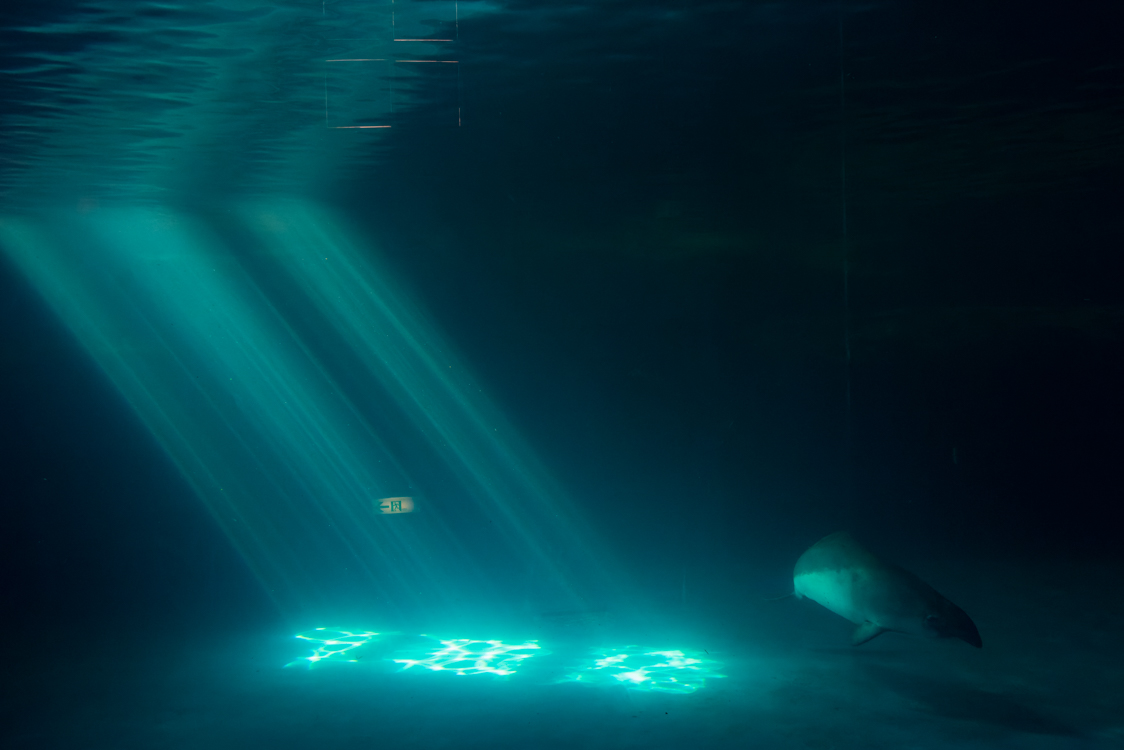
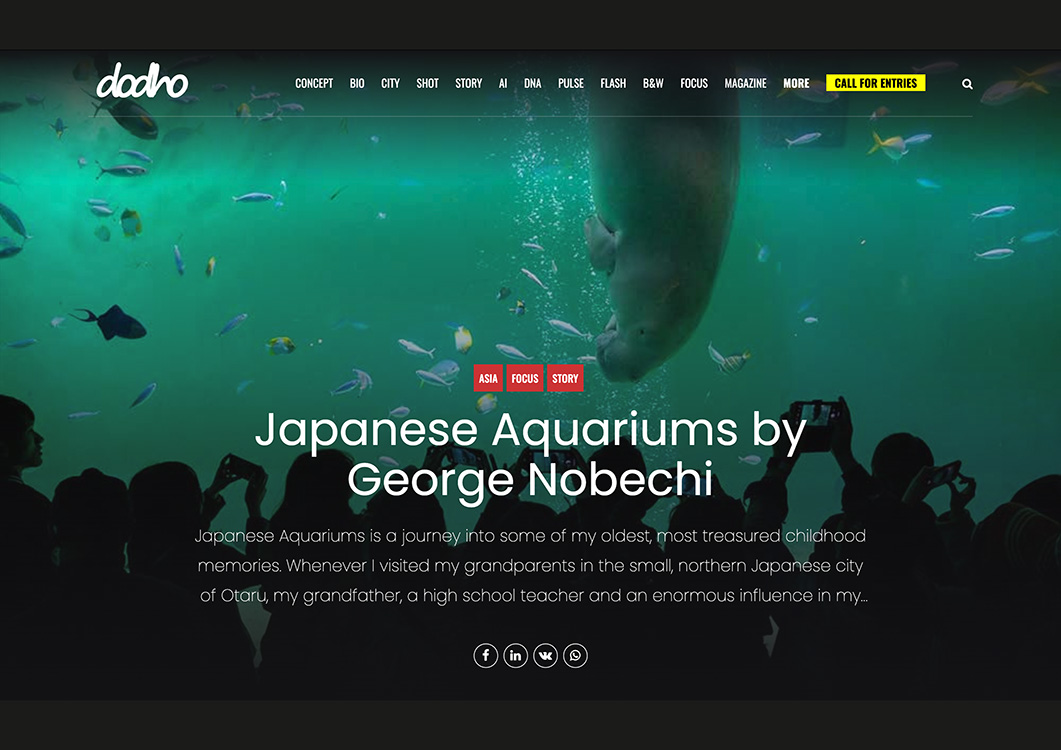
Japanese Aquariums is a journey into some of my oldest, most treasured childhood memories. When I would visit my grandparents in the coastal city of Otaru in Hokkaido, my grandfather, a high school teacher and an enormous influence in my life, would take me to the aquarium.
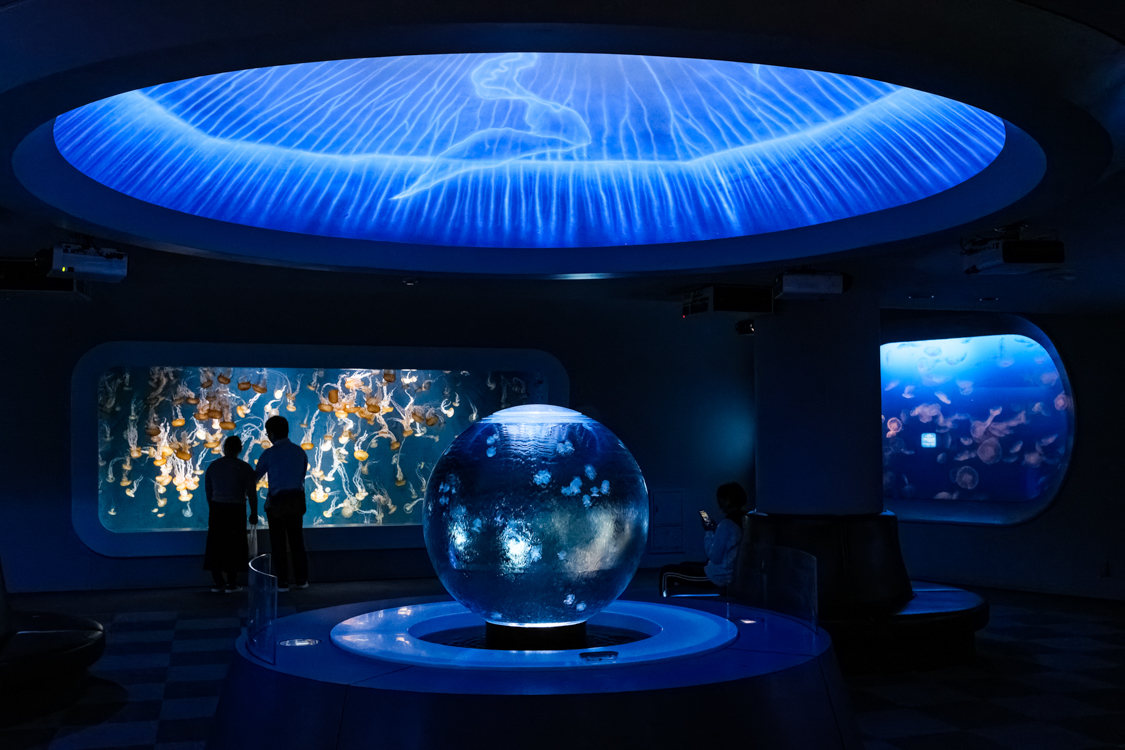
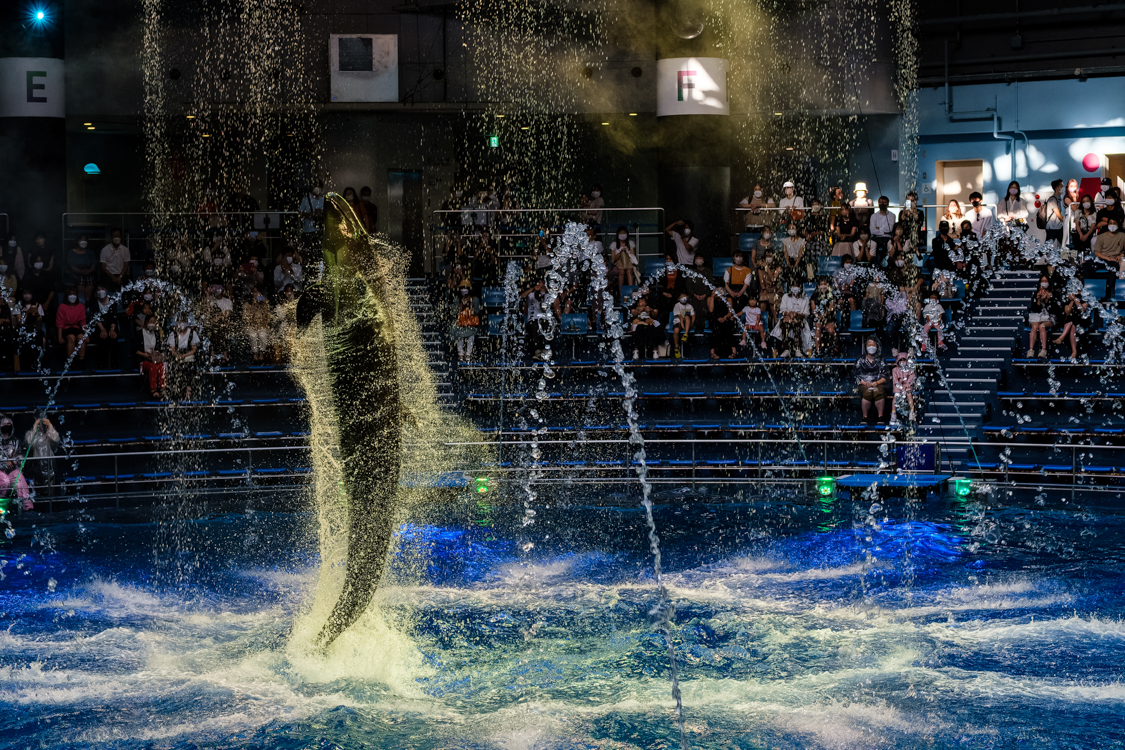
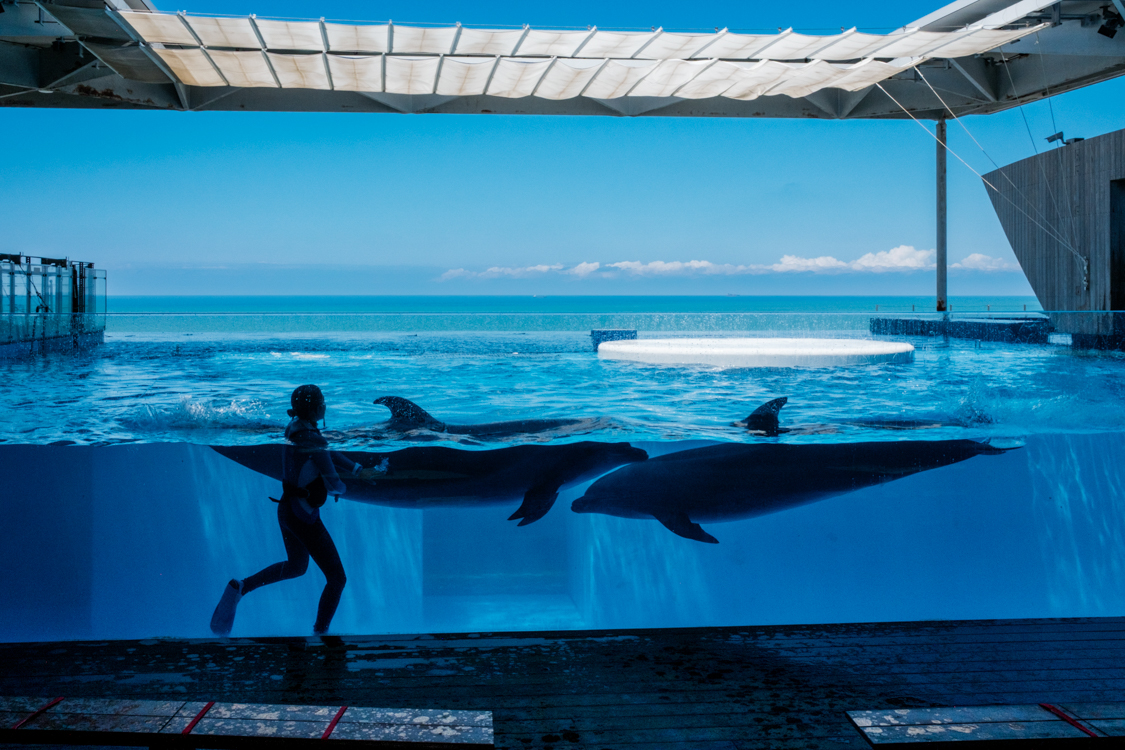
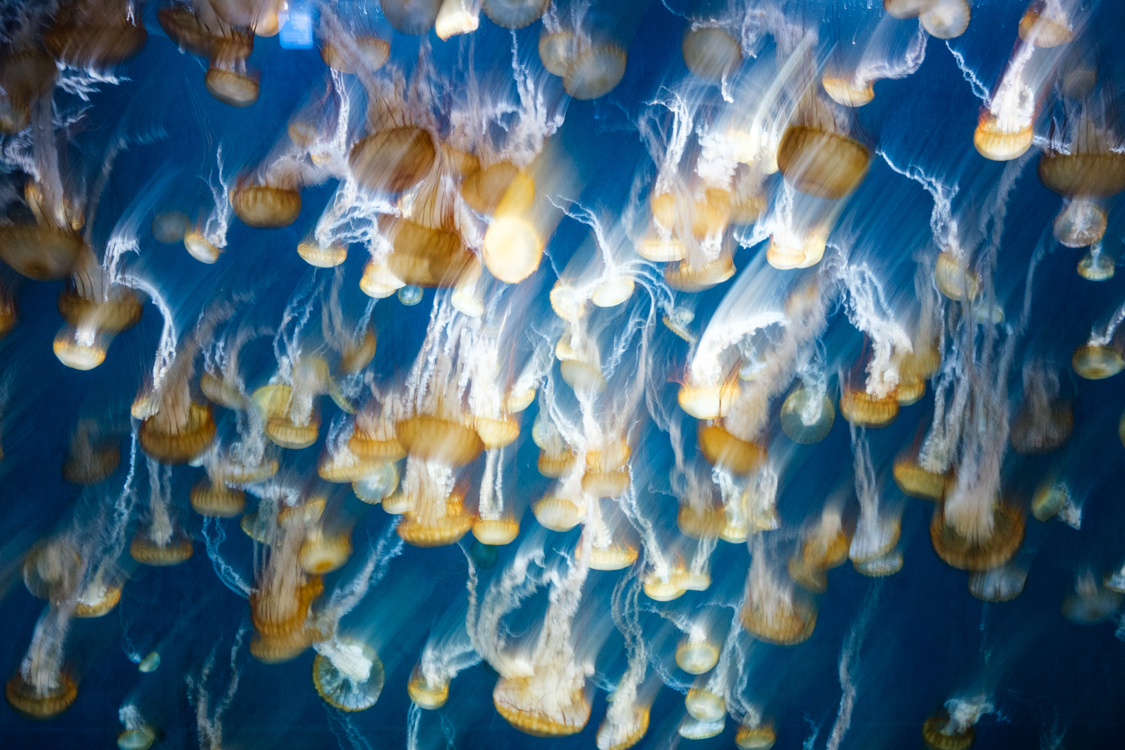
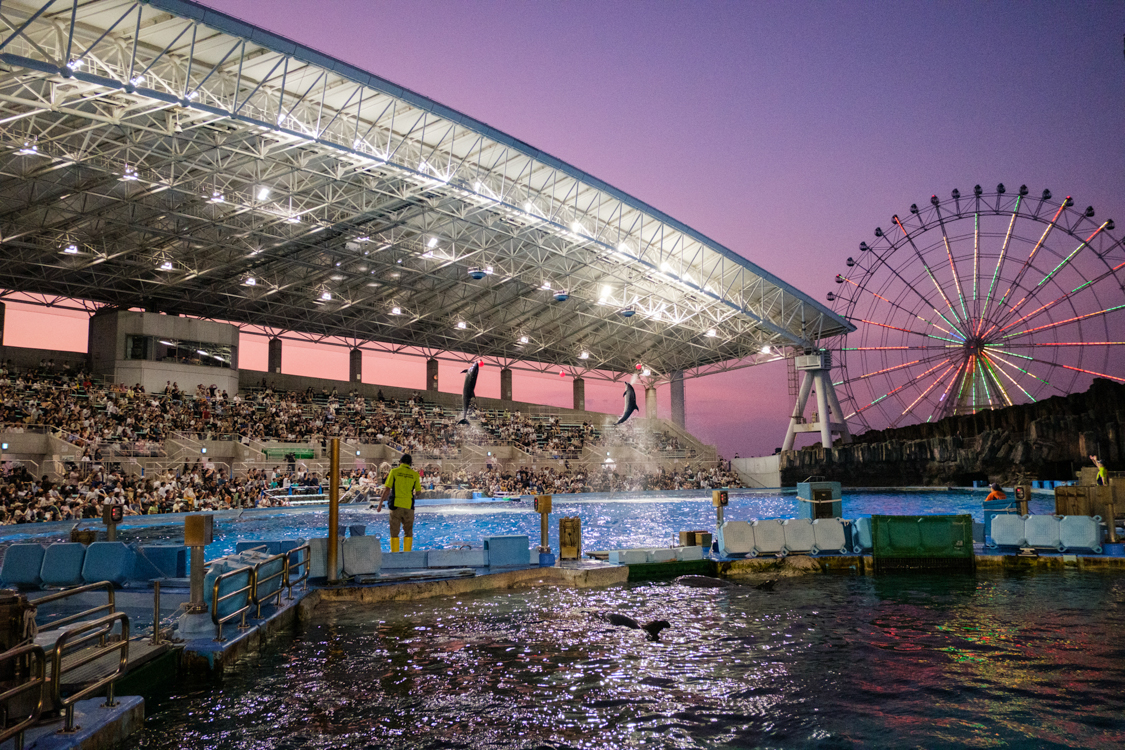
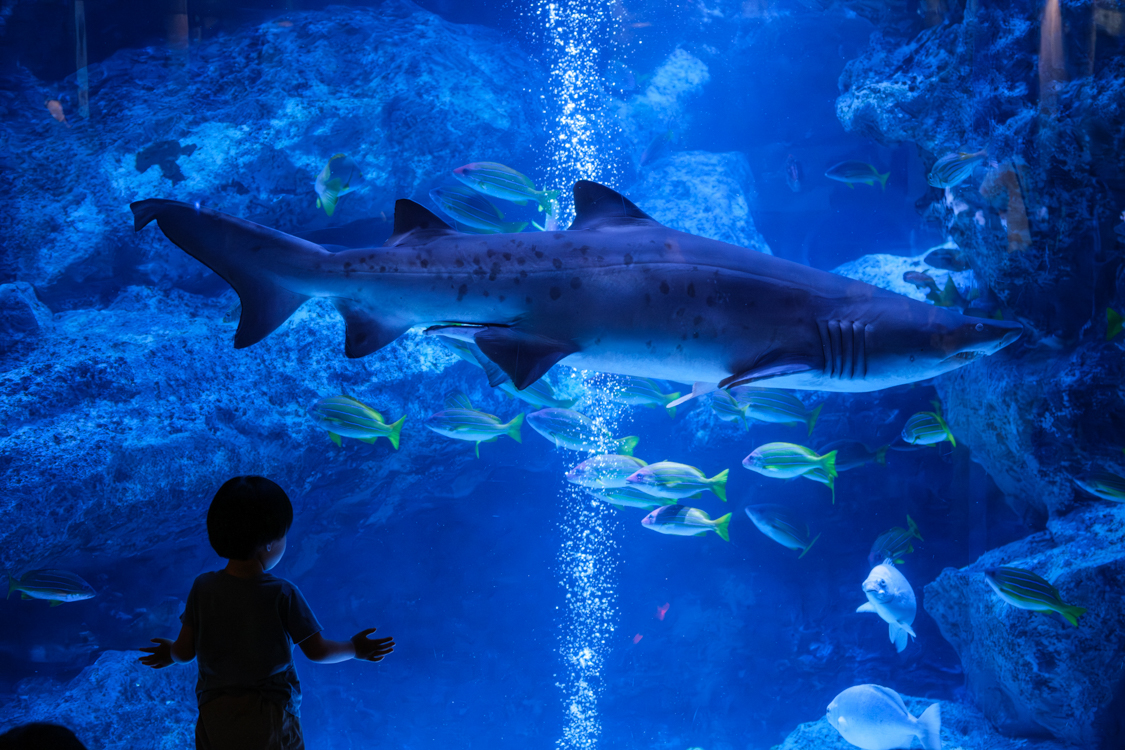
We would observe the gentle “flight” of the sea turtles, the silky-smooth movements of cruising sharks, and the alien-like appearance of jellyfish. Particularly memorable were the dynamic dolphin and sea lion shows set to the popular rock music of the time. I was blissfully unaware of the moral dilemmas of keeping mammals in captivity.
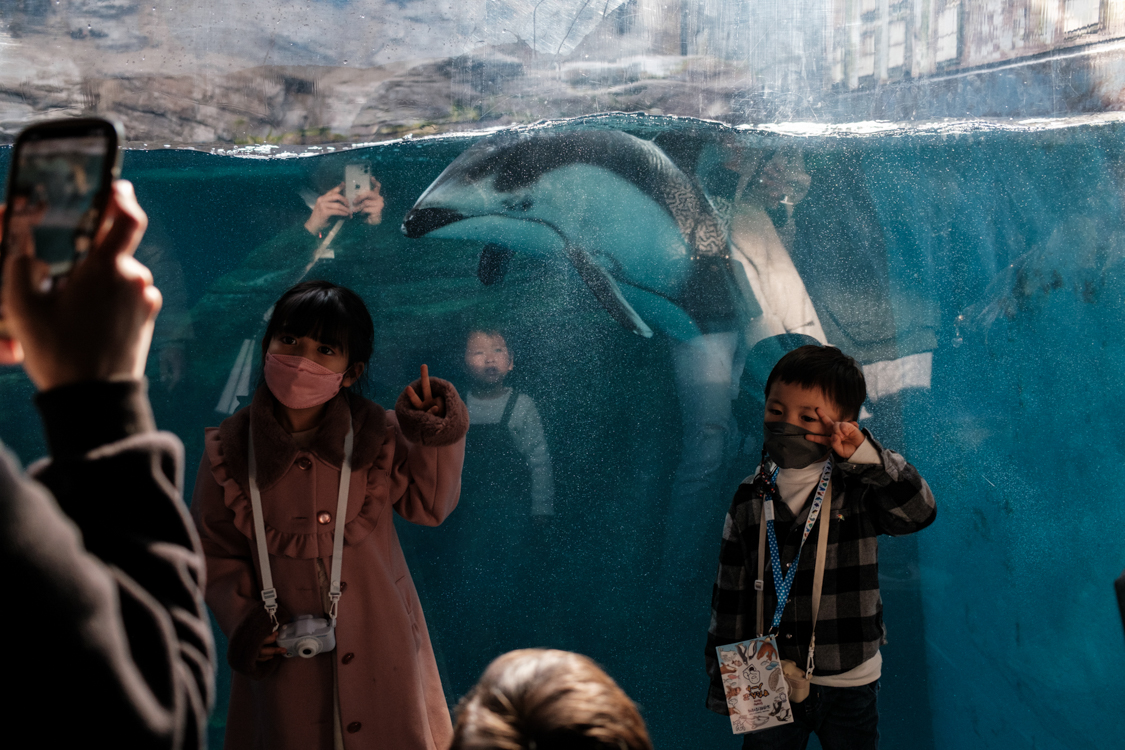
These days, the question of the animals’ well-being is very much on my mind, but I also see the joy of the young boys and girls at aquariums today, and like a looking glass through time, I recall the pure and happy times I spent with my beloved grandfather.
As of 2019, of the approximately 400 aquariums in the world, 150 were located in Japan. Given the country’s aging demographics, this does not seem sustainable, even as aquariums attempt to shift their existential purpose toward conservation, animal rescue and education. Since then, there has been a decline, with a number of closures coming out of the pandemic. Perhaps aquariums will go the way of the circus one day, logged in our history books as an outdated form of entertainment, but for now, in Japan, they remain immensely popular.
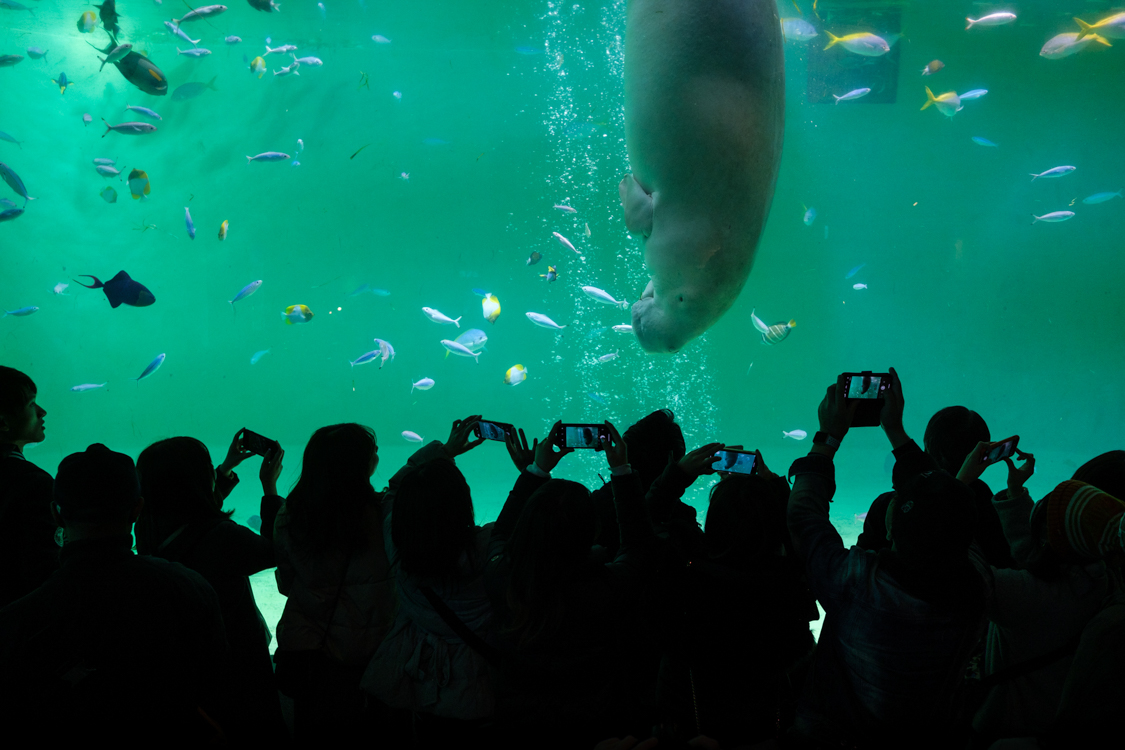
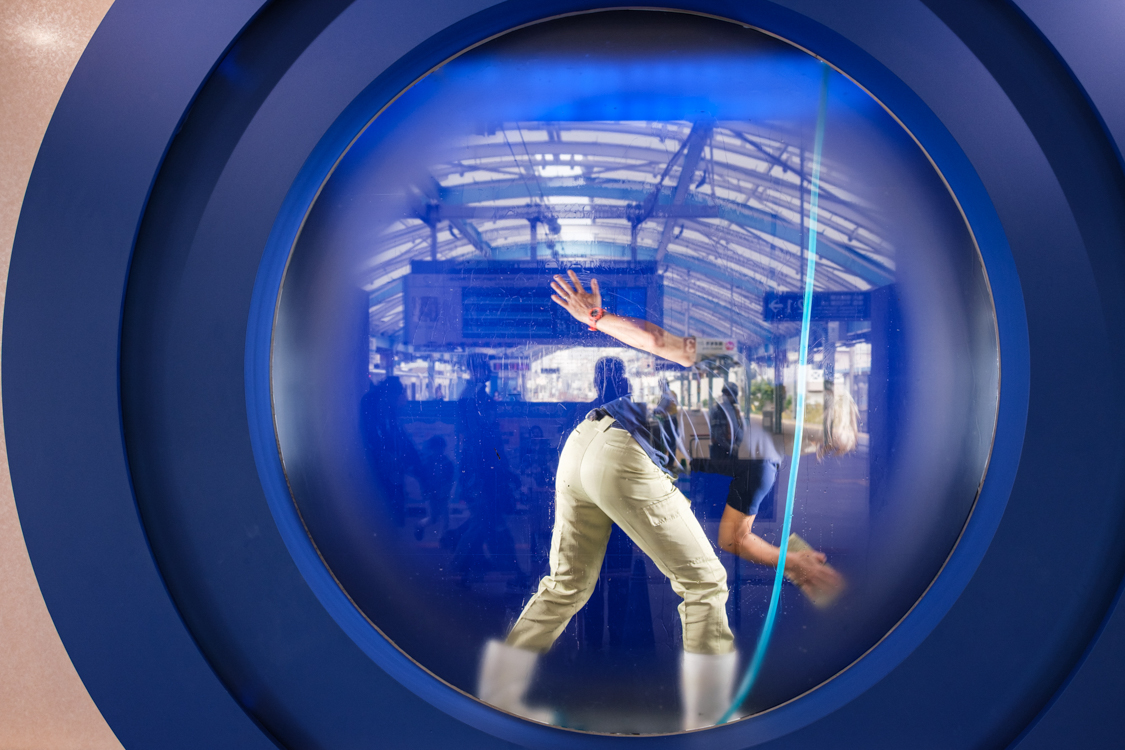
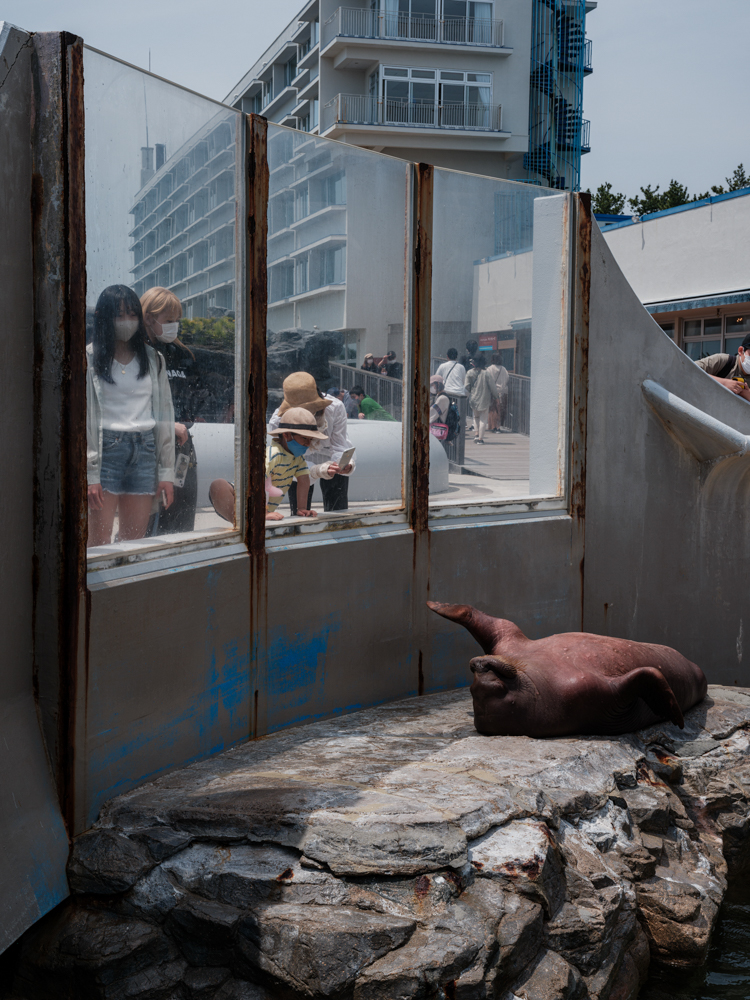
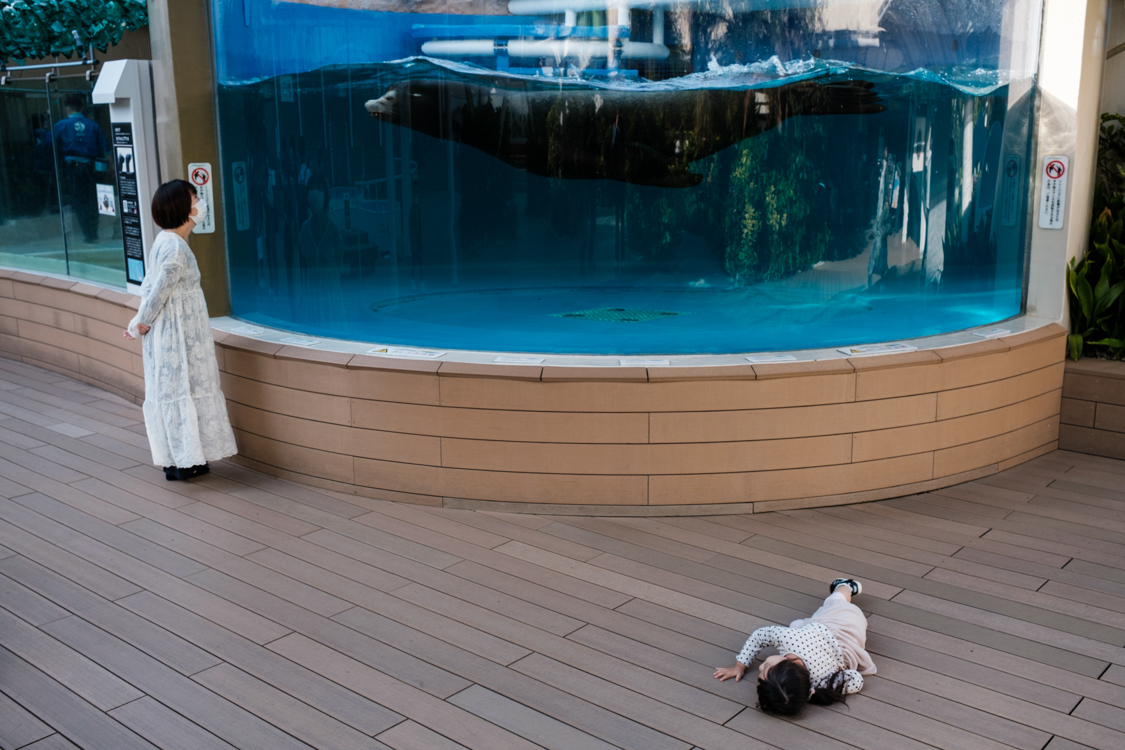
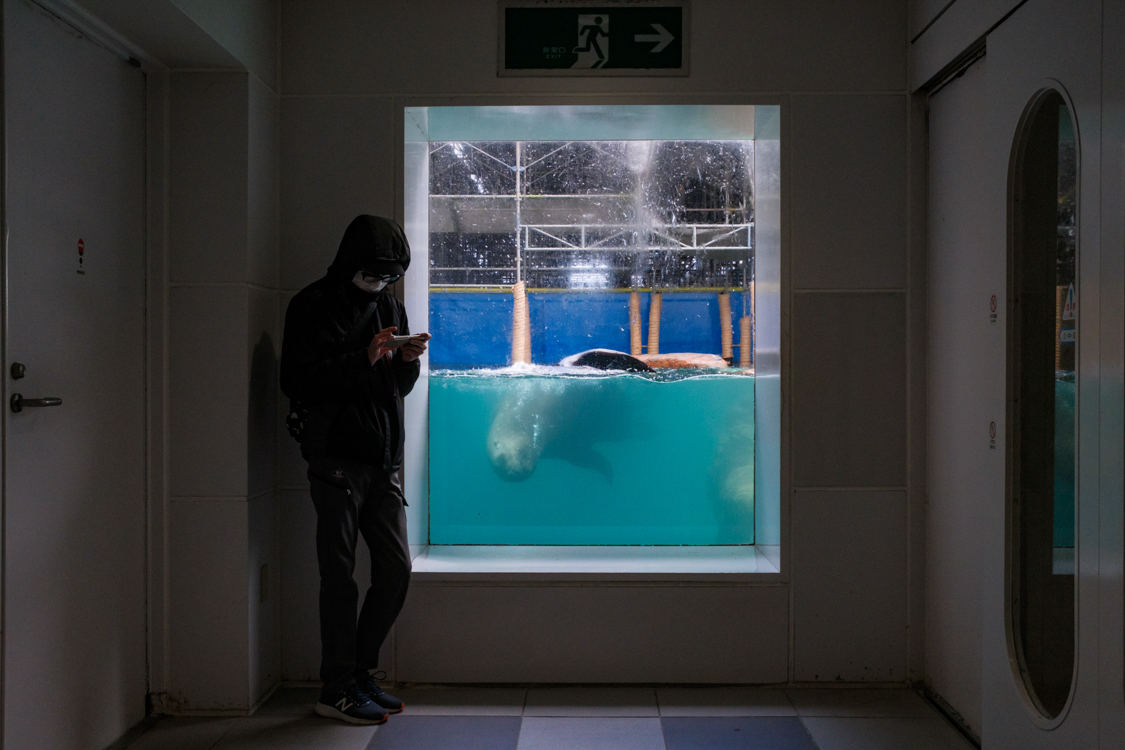
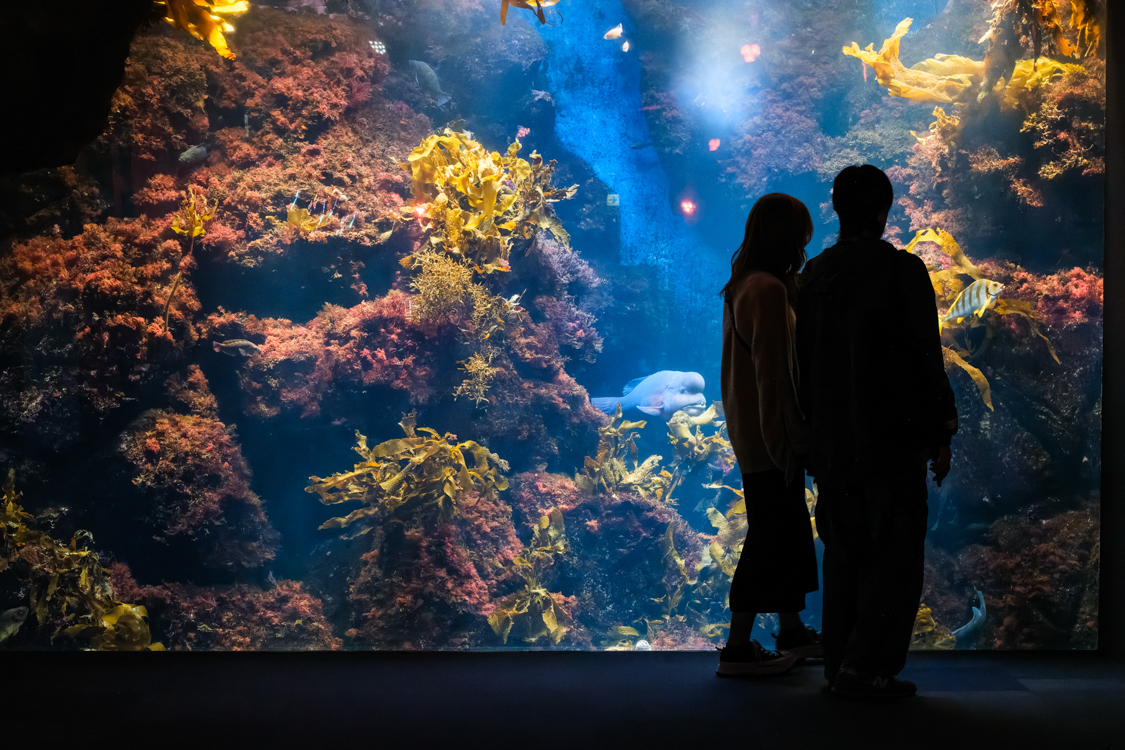
As Winogrand explored the interactions between people and beasts in his seminal book The Animals, I am interested in the human element that seeks to exploit our curiosities by putting these underwater creatures
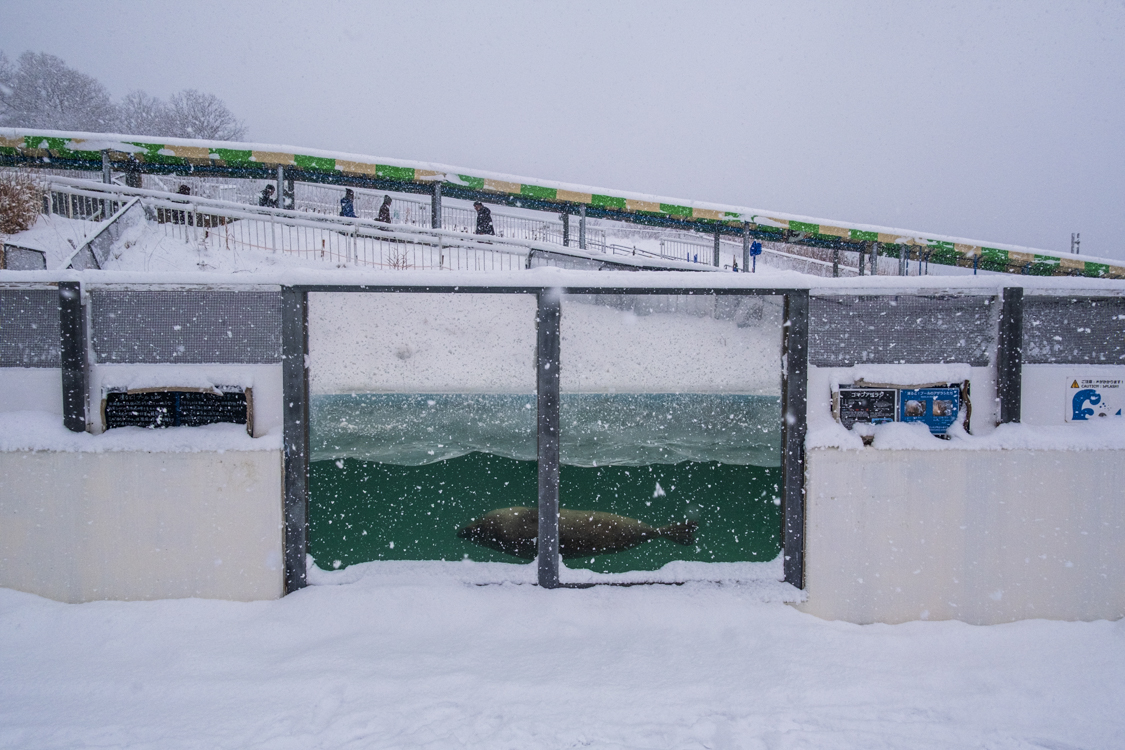
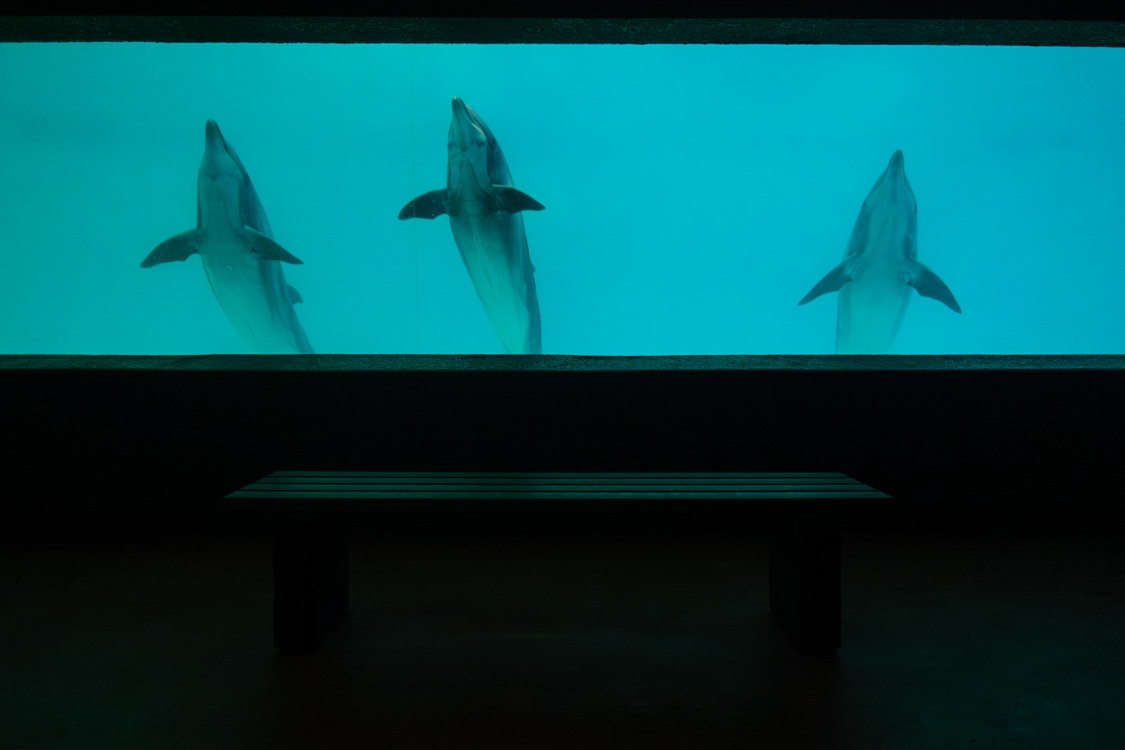
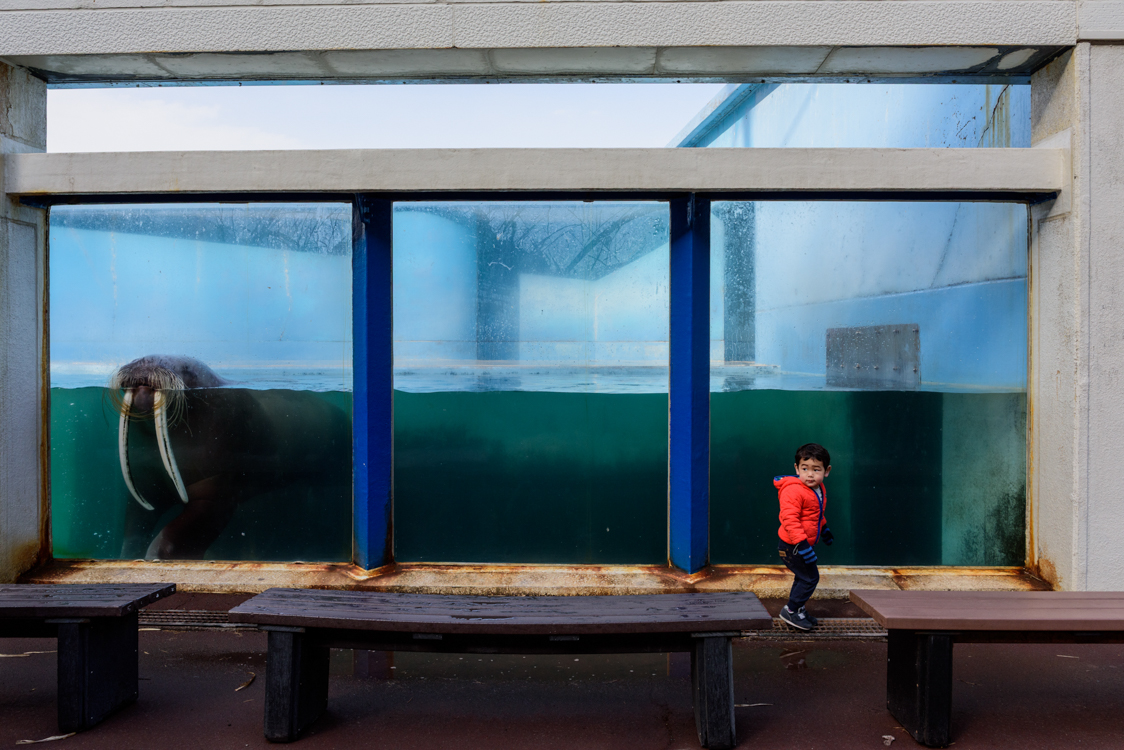
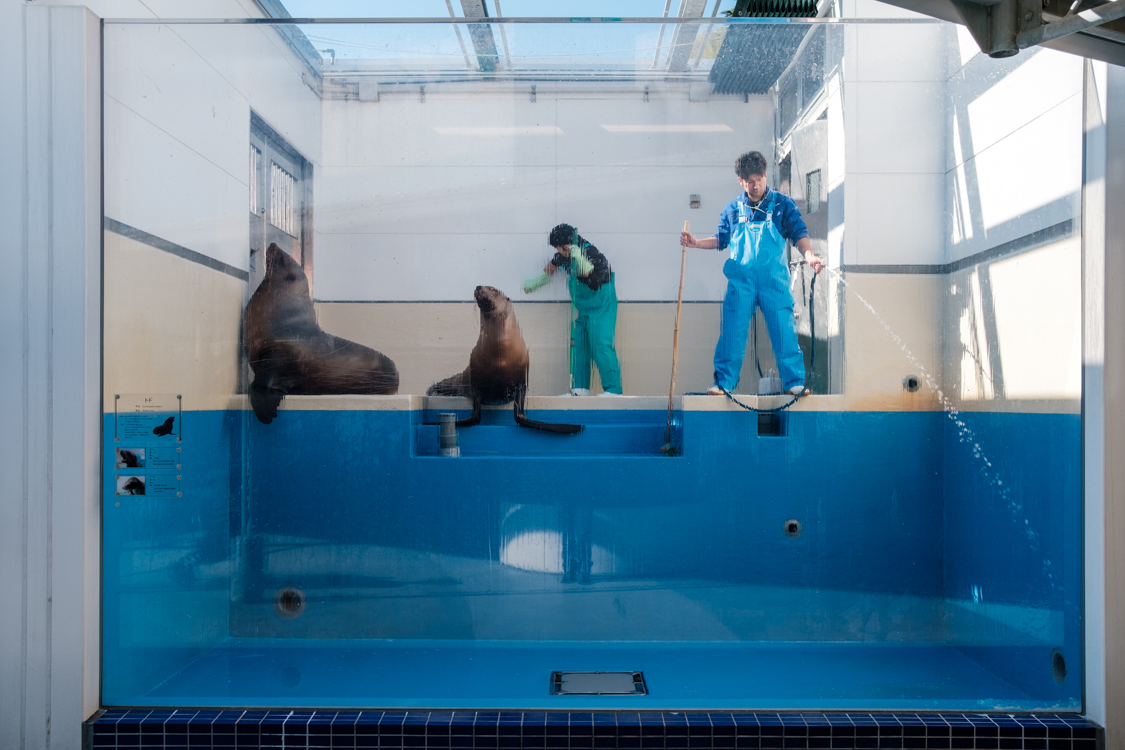
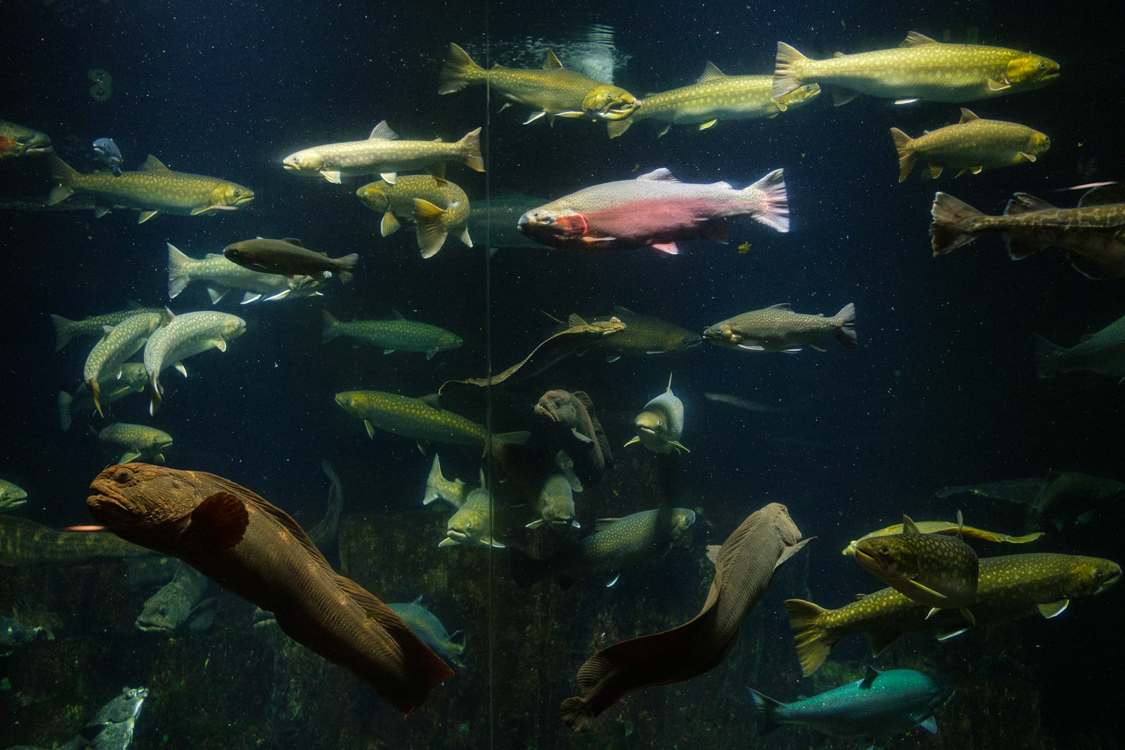
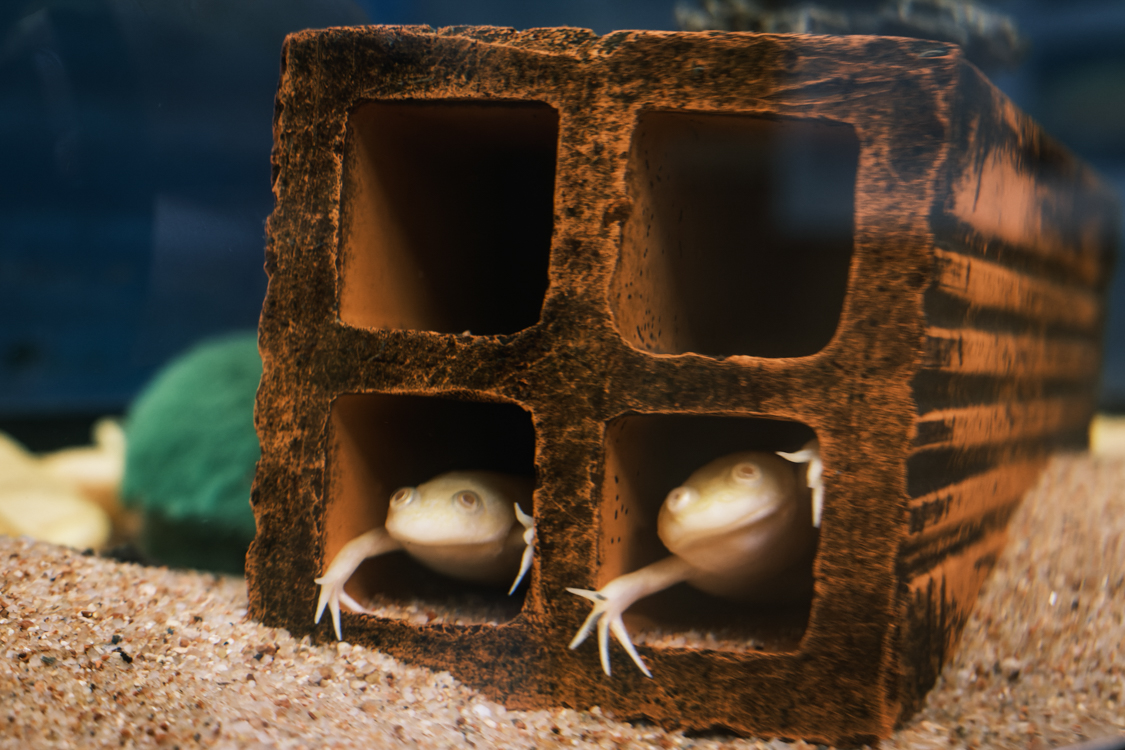
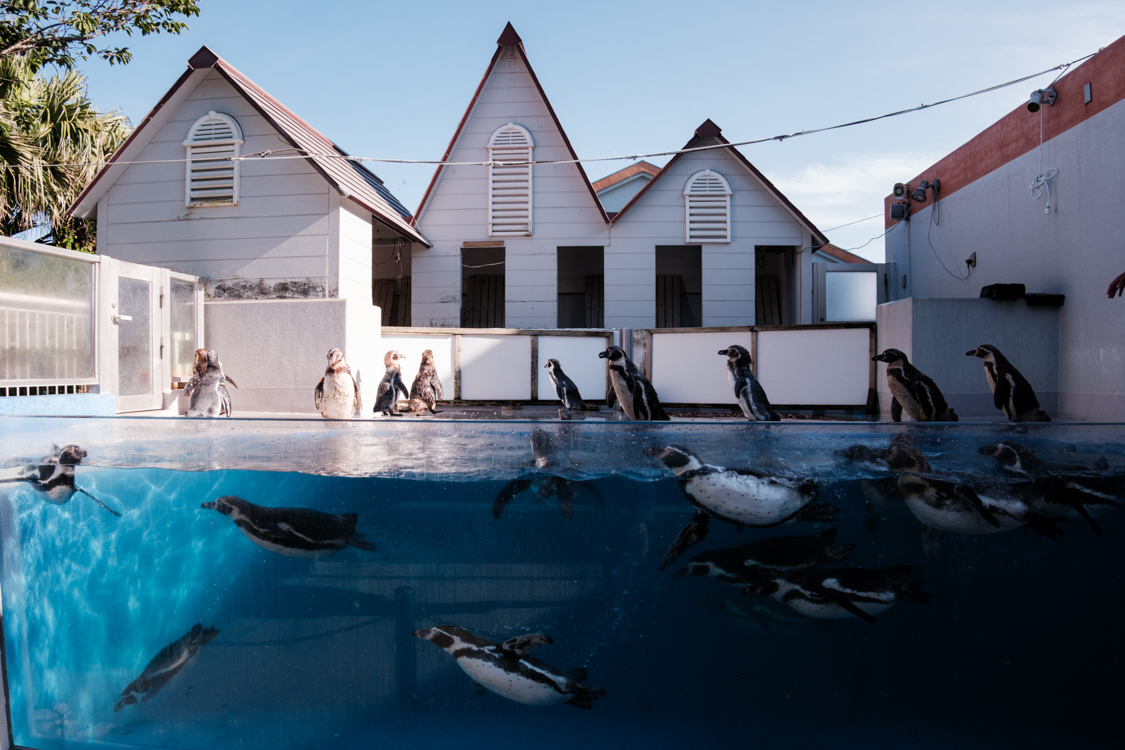
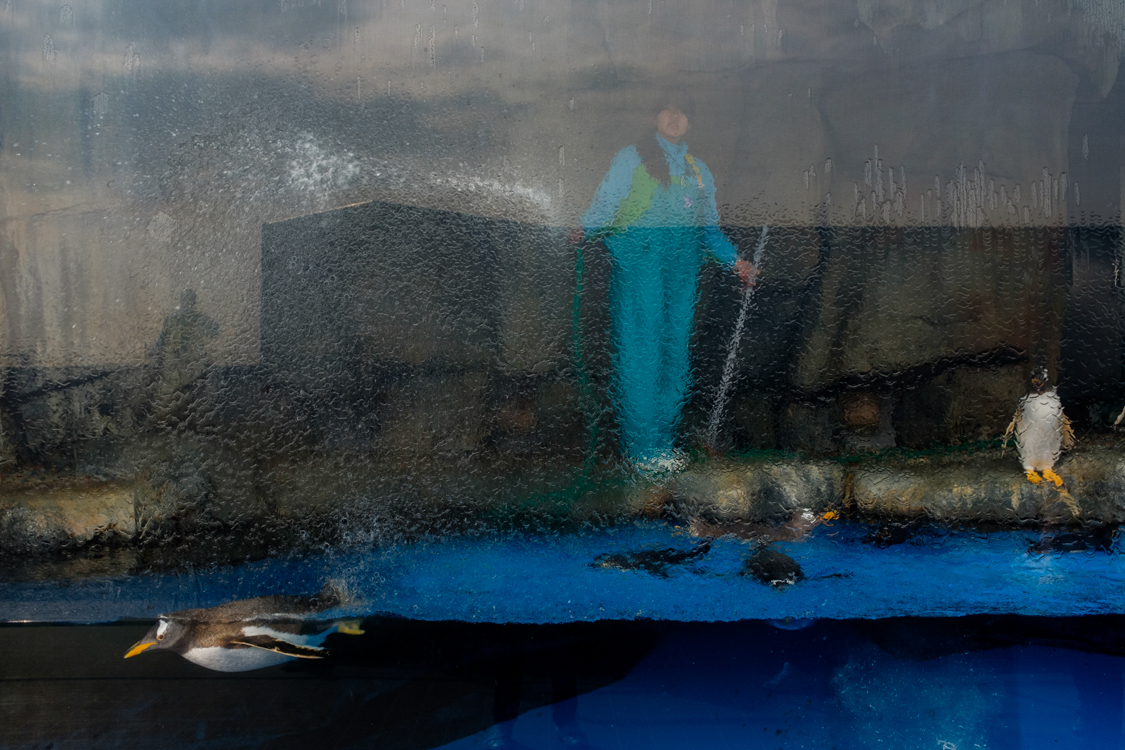
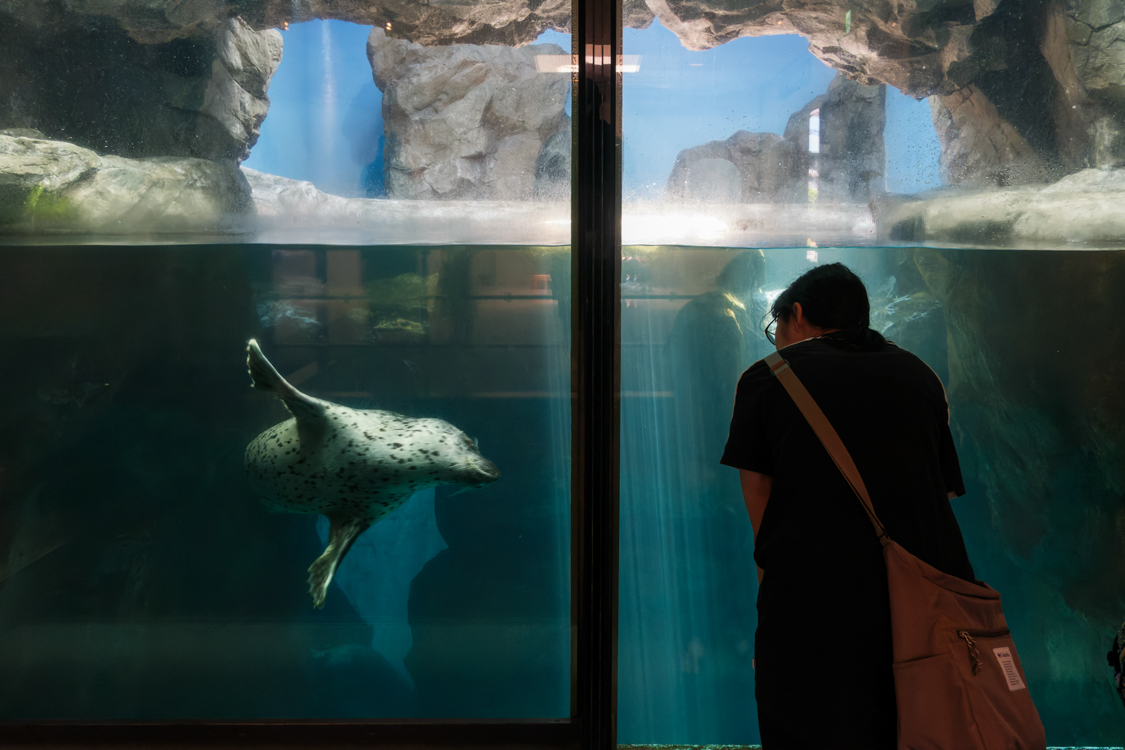
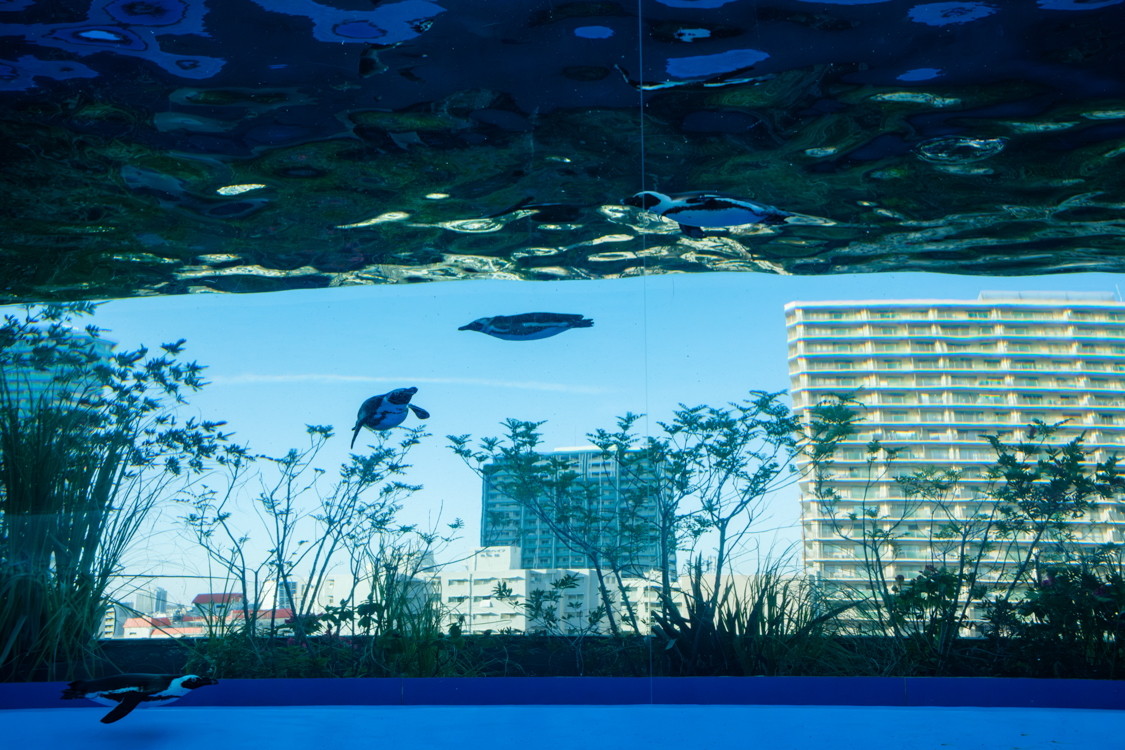
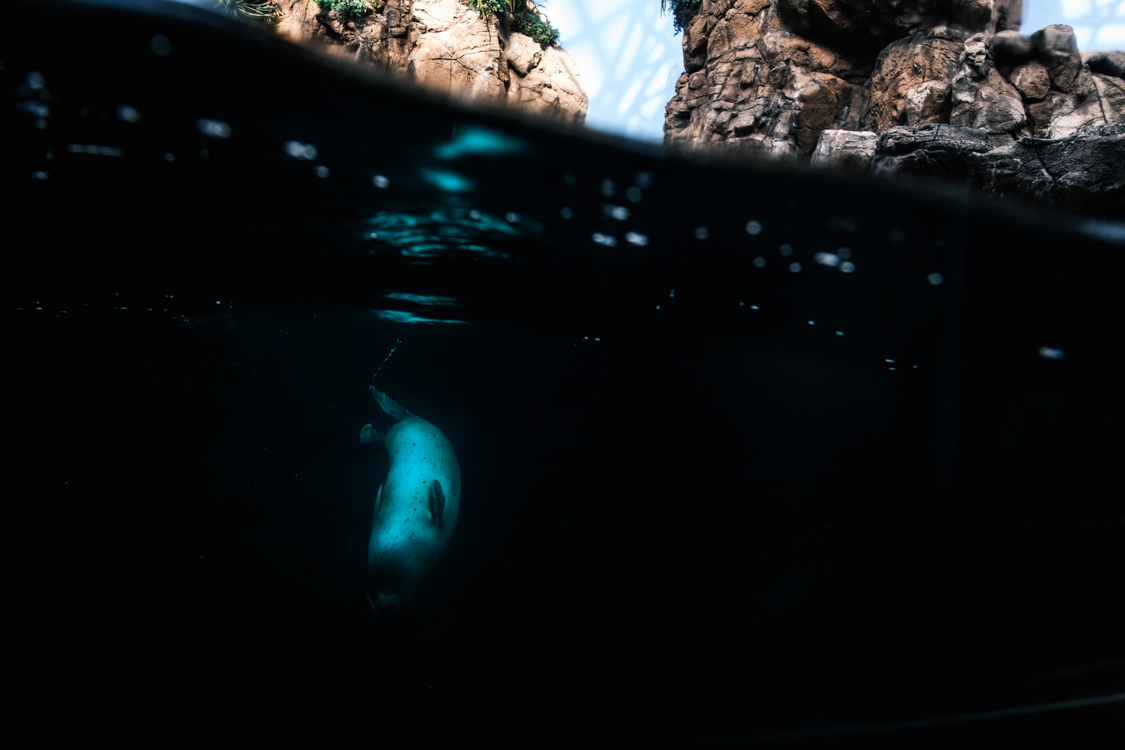
on display, and also in how sometimes we are left wondering if the animals view us as the strange bipeds on the other side of the acrylic. The Japanese design elements and aesthetics add to the surreal mood of these created worlds, and we view these scenes at the intersection of fond nostalgia, genuine fascination, and uncomfortable empathy.
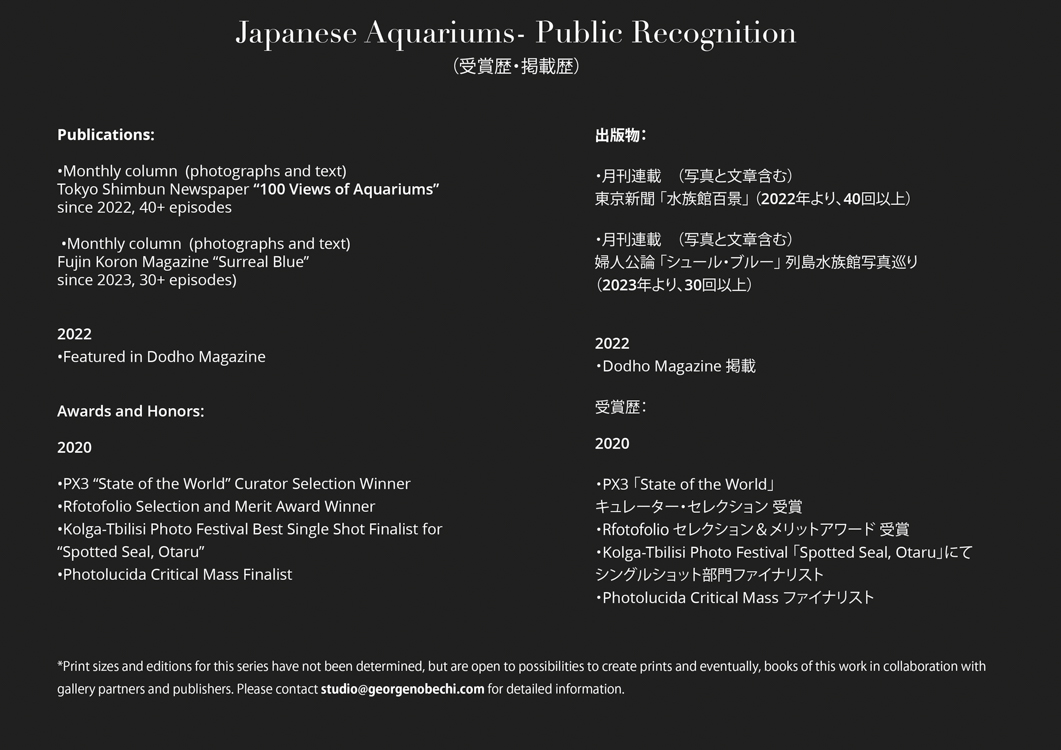
This series has taken on new life in the form of monthly columns with the
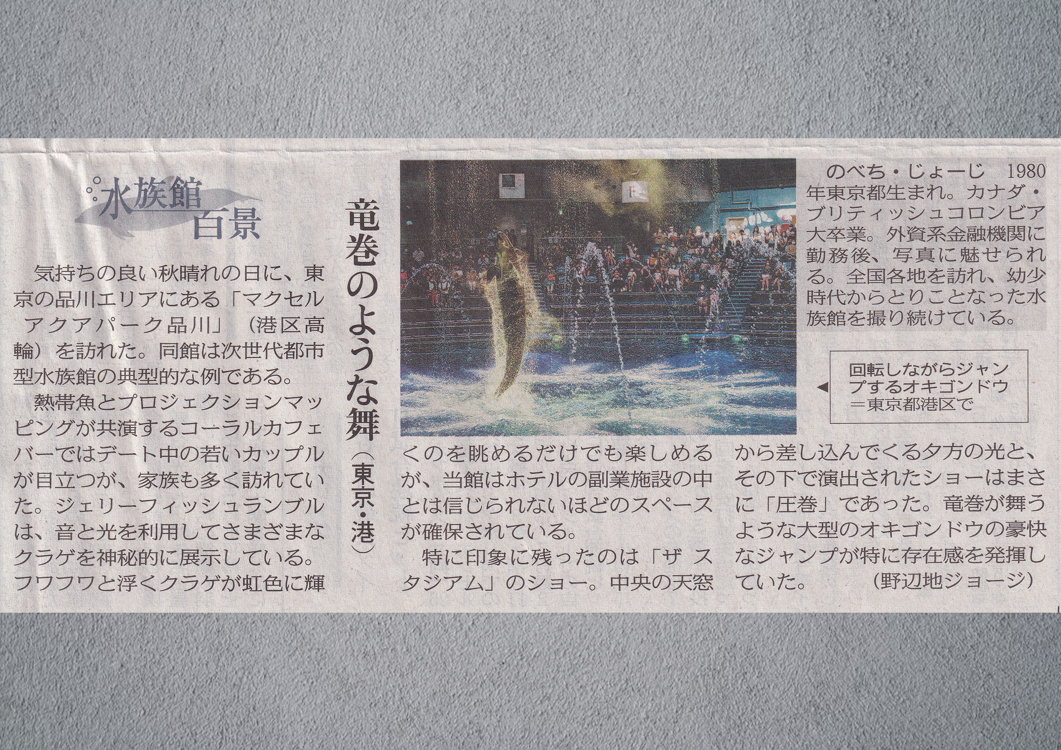
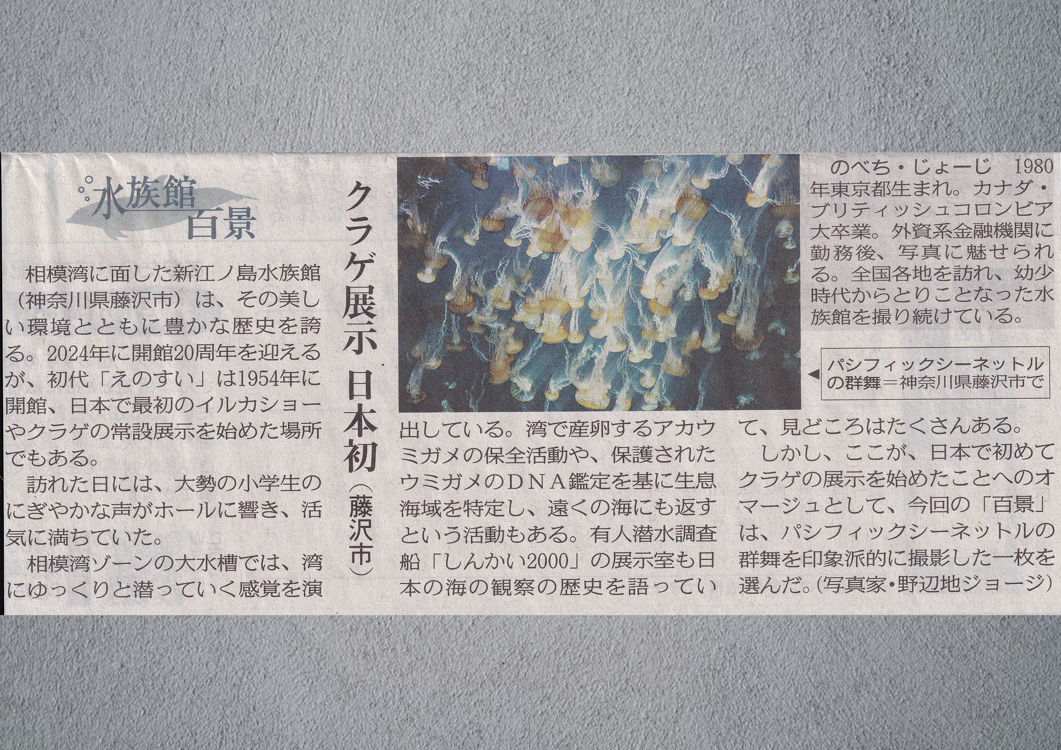
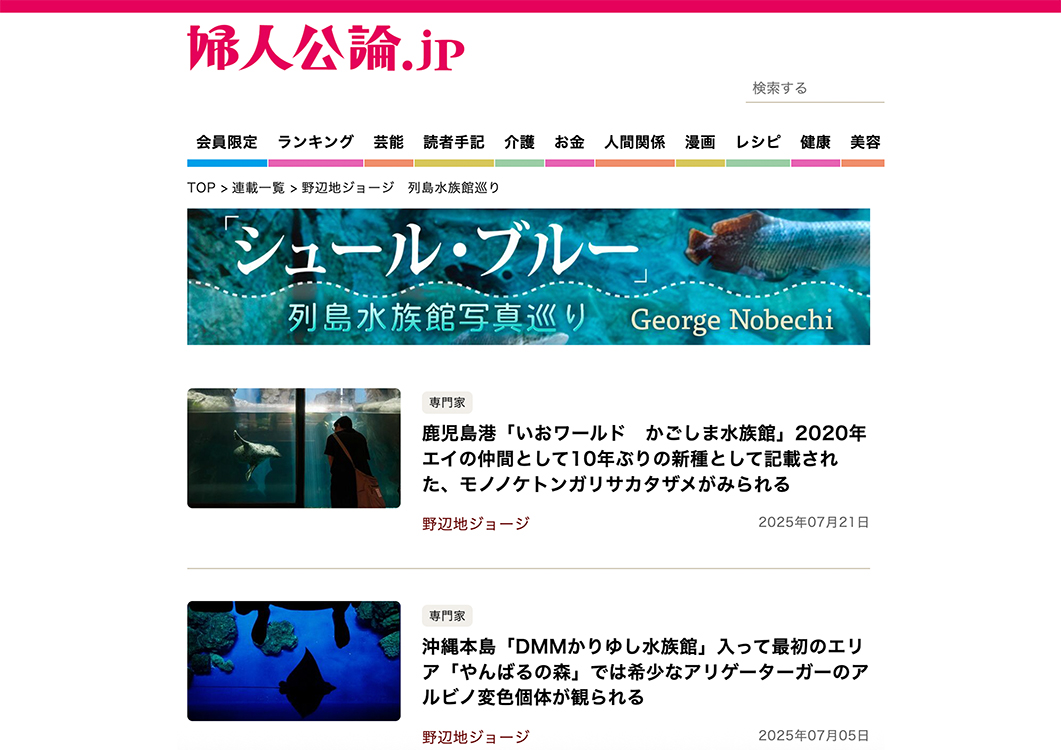
Tokyo Shimbun Newspaper: “100 Views of Aquariums” (four years and 40+ episodes) and Fujin Koron Magazine “Surreal Blue”, (three years and 30+ episodes).
「日本の水族館」2015-
「日本の水族館」は、私にとって最も大切な幼少期の思い出への旅である。小樽に住んでいた祖父母を訪ねるたび、教師だった祖父が、おたる水族館に連れて行ってくれた。
私はウミガメの優雅な泳ぎ、サメの鋭いフォルム、クラゲの異世界を観察した。特に印象的だったのは、当時の人気アニメのテーマ曲に合わせて開催されたダイナミックなイルカとアシカのショーだった。当時は哺乳類を飼育することのジレンマには無関心だった。今になって水族館を訪れる時にそこで遊ぶ子供たちの喜びを見れば、時空の鏡を通して、祖父と過ごした純真で幸せな日々を思いす。
このシリーズをはじめた2019年には、世界にある約400の水族館のうち150近くが日本にあった。 高齢化社会が進む中、水族館が存続の目的を保全、動物の救済、教育へとシフトしようとしているにもかかわらず、この数は持続可能とは思えない。実際には、パンデミック以降、閉鎖する施設が増加している。いずれ水族館はサーカスと同様に、歴史の教科書に「過去の娯楽」として残されるのみになるかもしれない。
しかし、今は島国である日本では依然として圧倒的な人気を誇る水族館。日本の水族館のデザイン要素と美学は、これらの創造された世界のシュールな雰囲気を演出している。アメリカの写真家ゲイリー・ウィノグランドが「The Animals」で人間と動物の相互作用を探求したように、水中生物を展示することで私たちの異世界への好奇心をそそる世界を描いている。また、時折、動物たちが私たちをアクリルの向こう側にいる不思議な陸動物として見ているのかと疑問に思う瞬間もある。
私たちは懐かしさ、好奇心、そして動物たちへの同情の気持ちの複雑な交差点で水族館の世界を目撃している。
*水族館の写真の一部は、東京新聞の月間連載シリーズ「水族館百景」(2022年〜)と婦人公論.jp「シュール・ブルー」で定期的に掲載されています。このシリーズのプリントサイズとエディションは未定ですが、今後ギャラリーパートナーや出版社とのコラボレーションでプリント制作や写真集の刊行の可能性もあります。